




What Is Outsourcing? A Simple Guide for Beginners
If you’re a beginner in handling business operations, the term “outsourcing” can be intimidating to hear. But it’s one of the most tried and true, and effective, tactics companies use to grow in an efficient manner. Whether you are a small-business owner, an e-commerce entrepreneur expanding your online store, or the founder of a mid-sized company, outsourcing can not only save time and cut costs but also bring in experienced help without having to hire people full-time.
To get a sense of outsourcing, consider this hypothetical: You operate a small business that gets hit by an influx of customer calls that your staff is unprepared to field. Calls go unanswered, emails backlog and customers get frustrated. Months of investment are needed for hiring and training new employees. Instead, you lean on an expert customer support provider who takes over in a matter of days, guides the work, and keeps your customers happy. That’s outsourcing in action, letting the professionals do what they do best so that your business runs better.
This straightforward guide explains what outsourcing is, how it works, and why companies depend on it along with what novices need to know before they start.
What Exactly Is Outsourcing?
Outsourcing is a strategy by which an organization contracts out certain tasks, processes or functions to an external specialist company. Rather than doing everything in house, companies contract with outside vendors to do things faster, cheaper or better.
Common outsourcing areas include:
- Customer service
- Accounting and finance
- Data entry and back-office support
- HR and payroll
- IT and technical support
The concept is simple: allow your team to do what they do best, and leave the rest to the pros.
Why Do Companies Outsource? A Practical Explanation
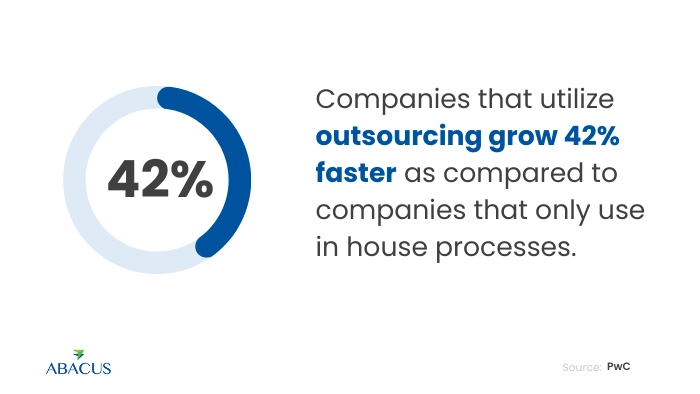
Forward-thinking companies outsource to leverage on specialized expertise and lower their operational costs, while at the same time optimizing manpower efficiency. Outsourcing is more than just a budget decision for many companies. It enables them to compete in a global market, where speed, knowledge, and customer engagement have never been more important.
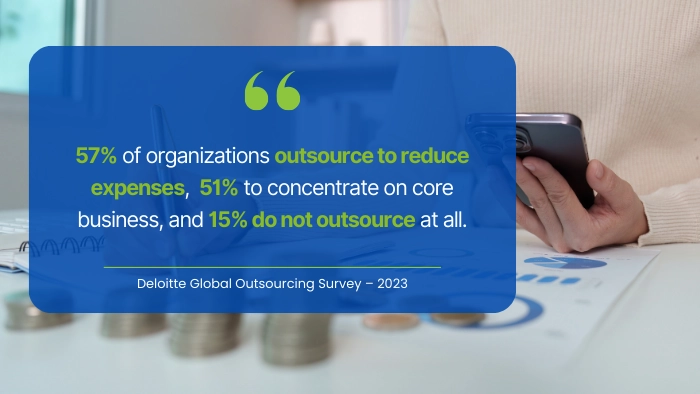
These numbers demonstrate that outsourcing is no longer a contingency plan; it’s now a primary force behind business success.
Types of Outsourcing
Outsourcing comes in different types depending on the location of service provider and the type of support needed.
1: Onshore Outsourcing
Onshore Outsourcing is where a business teams up with a company in the country it operates in. There is convenience, but you may be paying a premium for it.
2: Nearshore Outsourcing
Nearshore Outsourcing is when companies are outsourcing to countries not too far away in the same time zone. It toes the line between cost efficiency and being easier to collaborate with.
3: Offshore Outsourcing
There’s also offshore outsourcing, which means working with providers in countries that are more distant. The reason that this model has found favor is because of cost savings and the availability of large, skilled manpower.
4: Business Process Outsourcing (BPO)
This is the typical form of an outsourcing model, and covers customer service, finance, HR and back-office functions. BPO bring vertical expertise and best-in-class tools to run complete business functions effectively.
What Services Do Companies Commonly Outsource?
Of course, outsourcing can be used for any business function, but few services are particularly common because they are time-consuming or highly skilled.
Business Area | Examples of Outsourced Services |
Customer Support | Call centers, live chat, email support |
Finance & Accounting | Bookkeeping, accounts payable/receivable |
HR & Admin | Recruitment, payroll processing |
IT Services | Technical support, helpdesk, monitoring |
Back Office | Data entry, document management |
Businesses can also start with just one service and grow from there as they realize the benefits of outsourcing.
Key Benefits of Outsourcing for Beginners
If you’re new to outsourcing, these are the biggest benefits you’ll see quickly.
Cost Savings Without Sacrificing Quality
Outsourcing enables companies to cut down on costs in a big way. Savings: Outsourcing 70% to in-house Costs According to IBM Research (2023), it is estimated that companies save 30-60% outsourcing than hiring own staff.
These savings are on account of lower hiring, training, infrastructure, technology, and employee benefit costs.
Instant Access to Experts
Beginners often think that outsourcing is high-risk since the team may not “get” the business. The reality is, outsourcing enables you to tap into professionals who train themselves on the various tasks. That means work is done faster and with fewer errors.
Better Focus on Core Business
The more your team doesn’t have to worry about someone handling work like answering customer service calls or processing orders or managing payroll: the more time they can spend growing, selling and discussing strategy. This move increases productivity throughout the organization.
Scalability as You Grow
Outsourcing enables flexibility to increase or decrease the size of operation based on business requirements. Whether you need 5 agents today and 15 next quarter, outsourcing partners can scale rapidly without the time it takes to hire in house.
Is Outsourcing Right for Beginners? Here’s How to Know
New companies that are entering the world of outsourcing business operations wonder if this is something they should actually do. Of course, every company’s situation is unique, but outsourcing may be particularly helpful if any of the following apply to you:
- You’re overwhelmed with repetitive tasks
- You are interested in decreasing operation costs.
- You want customer service but can’t hire an entire team
- You’re growing rapidly and require scalable support
- You need expert assistance on an as-needed basis, with no lengthy hiring contracts.
If these are familiar, outsourcing offers both short-term relief and long-term efficiency.
Common Misconceptions About Outsourcing
Outsourcing is becoming increasingly more popular. There’s no question outsourcing is here to stay, but there are also a lot of myths about it. Learn what the facts are.
Most people believe that BPO services can lower the quality, but leading BPO companies work according to their set service level based on hard core performance standards, rigorous training programs, and technology-driven monitoring mechanisms. Some are concerned about “losing control,” however most outsourcing providers provide reporting mechanisms and workflow transparency in a way that adds to your level of control, not taking it away.
Being able to understand these subtleties makes it possible for young companies to hit the ground running when outsourcing.
Start Your Outsourcing Journey With Abacus Outsourcing
If you are new to outsourcing, finding the right partner is more important than anything else. Abacus is helping companies large and small to streamline their operations, slash costs, manage growth and ensure a seamless transition to the next generation.
Whether it’s customer support, accounting and finance, back office, or specialized operations support you need, we provide exceptional teams and infrastructure to help you grow globally with confidence.
Outsourcing shouldn’t be complex, especially when you have committed partners to light the way. Allow Abacus Outsourcing to run the task, while you build the future of your business.