



Spend Management vs. Expense Management: Key Differences Explained
As businesses scale, financial complexity grows with them. What starts as a simple need to reimburse employees quickly turns into a broader challenge of controlling organizational spend, managing vendors, forecasting budgets, and maintaining profitability. This is where most leaders experience the confusing interplay between two concepts:
Expense management and Spend management:
Both are about controlling costs, but that’s where the similarity ends. Interchangeable entities may be cheaper in the short run but can result in inefficiencies in the long run. Modern finance teams seeking to drive smarter decisions, not just cost cuts, need to understand how spending management is different from expense management and how the two complement each other.
In this guide, we compare the true differences, use case scenarios, and strategic implications of the two.
Understanding Expense Management: Controlling Day-to-Day Costs
Expense management deals with how the employees spend company money and how those expenditures are documented, examined, and reimbursed. It’s all about transactional correctness, compliance, and operational, as your legacy systems would do.
Expense management in most organizations includes travel, meals, office supplies, subscriptions, and other employee expenses. Typically, this process entails receipt of submission, expense categorization, approval routing, and reimbursements paid to employees in a timely manner. Not that they want to question why an expense was incurred, but did the expense follow company policy, and is it appropriately documented?
Operationally, expense management shields businesses against fraud, duplicate claims, and accounting mistakes. The Association of Certified Fraud Examiners (ACFE) estimates that organizations without strong expense controls lose five percent of annual revenue to fraud, with a significant portion relating to weak expense oversight.
Hence, expense management forms a key pillar in financial hygiene. But at the same time, it only provides a partial answer to the cost-control equation.
What Spend Management Really Means?
A much broader, more strategic view of organizational costs as a whole is what spend management entails. Rather than looking at single transactions, it analyses the movement of money to end through the business, across departments, suppliers, contracts, and long-term obligations.
Spend management encompasses everything from procurement strategy to amp; supplier negotiations to contract lifecycle to budgeting to forecasting to analytics. The ambition is not simply to track spending, but to steer where and how decisions are made on spending.

For instance, here are the questions that spend management helps to resolve:
Measurement: Why do we have five different vendors for the exact same service?
Is this a category to which we are overpaying?
If so, then you could ask yourself the following questions: What suppliers get you the best bang for your buck in the long term?
How do we reconcile where we spend our long-range business mission?
But, according to research by Gartner, effective spend management can lower indirect costs by as much as 20% with no impact on performance. Such savings arise not from day-to-day life, but from waste elimination and improved purchasing discipline.
The Core Difference: Tactical vs. Strategic Control
Intent is the key differentiator between expense management and spend management. Expense management is tactical. Spend management is strategic.
Expense management also makes sure that each expense is valid and adheres to the policy. Spend segmentation aligns the total organizational spending with business priorities, while making sure that it provides measurable value.
Expense management is reactive: it reacts to what has already been spent. The essence of spend management is that it is a forward-looking function, using insight and planning to influence future decisions.
Both are complementary but serve different purposes in the financial system of a business.
How the Two Work Together in Practice?
Although they differ, spend management and expense management are not competing in frameworks. In fact, they can best be used in conjunction with each other.
Expense management generates clean and correct transactional data. That data combined with procurement and supplier information is what spend management uses to determine trends, risks and opportunities for optimization. Spend analysis is only as good as the underlying expense data.
Expense reports, for instance, might uncover increasing travel expenses. It then looks at vendor contracts, preferred airlines or hotels, and travel policies to assess whether the company could save money by renegotiating or consolidating vendors without restricting employee mobility.
Such a synergy changes the essence of cost control from a reactive exercise to a proactively orchestrated strategy.
A Practical Business Scenario
Imagine a professional services firm that has developed over time in multiple regions. Employees often book travel, subscribe to software tools, and hire vendors on their own. The finance team leverages an expense management system and is able to see each and every transaction, and yet, the leadership is still confused about why the costs keep increasing.
Once the spend management’s best practices are in place, the organization sees duplicate SaaS subscriptions, supplier prices that vary widely, and decentralized purchasing. The company, without cutting employee benefits or slowing growth, cuts operational costs by 15 percent a year through vendor consolidation and contract renegotiation.
This outcome is not uncommon. As per the report by Deloitte, firms that use investment analytics along with the governance of procurement are getting 30 – 40% more cost transparency than those who only rely on expense tracking and control.
Key Areas Where Spend Management Adds Strategic Value
Spend management makes believe value by linking financial data to business decisions. Cost awareness goes a long way beyond merely measuring costs; it gets organizations off the treadmill of plain historical data and toward purposeful and quantified planning.
Main areas of impact include supplier rationalization, contract compliance, budget accuracy, and risk reduction. Spending history analysis over a period can help businesses in better prediction and avoid the budget overrun at the end of the moment.
Governance is another key aspect of spending management. This helps in implementing procurement policies faster among the departments while lowering the level of “maverick spend” and increasing compliance.
Expense Management Still Matters; Here’s Why
Expense management is still important even if spending management has a more strategic focus. No spend strategy can be successful without strong expense controls
Delayed reimbursements frustrate employees. Manual receipt processing increases errors. Fraud and policy violations can result from weak approval of workflows.
According to a report by SAP Concur, organizations rely on online expense management systems to reduce processing costs by more than 50% relative to organizations dependent on manual systems. Such efficiency also allows finance teams to spend more time on high-value analysis and less on administrative work.
To sum up, expense management is the basis. Spend management builds on it.
Technology’s Role in Modern Financial Management
Advancements in automation, artificial intelligence, and analytics have reshaped both spend and expense management. Today’s platforms can automatically categorize expenses, flag anomalies, and generate real-time insights.
Spend management tools now integrate procurement, finance, and supplier data into unified dashboards. Predictive analytics help organizations anticipate future spending trends rather than reacting after the fact.
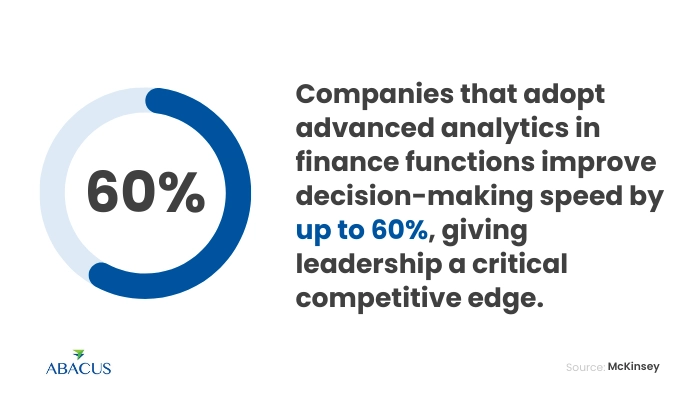
According to McKinsey, companies that adopt advanced analytics in finance functions improve decision-making speed by up to 60%, giving leadership a critical competitive edge.
Technology does not replace financial judgment but it dramatically enhances it.
One Short Section with Minimal Bullets (As Requested)
Organizations that successfully balance spend and expense management typically focus on:
- Centralized visibility across all spending categories
- Strong policy enforcement paired with flexibility
- Regular spend reviews tied to business goals
Common Challenges Businesses Face
Despite clear benefits, many companies struggle to implement effective spending and expense management. Fragmented systems, lack of ownership, and resistance to change often slow progress.
Some organizations rely too heavily on expense management, believing it alone controls costs. Others adopt spending analytics but lack clean data. The most successful businesses address both simultaneously and treat financial management as an ongoing discipline rather than a one-time initiative.
Why Outsourcing Can Accelerate Financial Maturity
For many growing businesses, building in-house expertise for spend analysis, procurement governance, and expense optimization is expensive and time-consuming. This is where outsourcing becomes a strategic advantage.
Outsourcing partners bring proven frameworks, skilled analysts, and scalable resources. They help organizations gain immediate visibility into spending patterns, improve compliance, and implement best practices without disrupting internal teams.
Rather than hiring multiple specialists, companies can access end-to-end financial support through a single, experienced partner.
Conclusion: Turning Cost Control into Competitive Advantage
Understanding the difference between spend management and expense management is more than a finance exercise; it’s a strategic necessity. Expense management keeps daily operations compliant and efficient. Spend management ensures that every dollar supports long-term growth and value creation.
Organizations that master both gain clarity, control, and confidence in their financial decisions.
Abacus Outsourcing helps businesses achieve this balance by providing expert-led financial support, advanced analytics, and scalable outsourcing solutions. Whether you need better visibility into expenses or a strategic approach to managing enterprise-wide spend, Abacus empowers your finance function to move from cost control to value creation.
Partner with Abacus Outsourcing to transform how your business manages, analyzes, and optimizes spending, today and for the future.