



How AI-Powered Voice Assistants Work: NLP & ML
It starts with a simple sentence.
“Hey Siri/Google, what’s the fastest way to get to work today?“
Your phone picks up what you said, processes the meaning and intent of your words, finds your geo location, checks live traffic data and responds within a fraction of a second in a natural human-like voice. The seamless operation of several technologies would make what you might consider easy to operate appear to you as the result of a sophisticated interplay of many advanced technologies working in perfect harmony.
AI-powered voice assistants have ceased to become experimental gizmos. They have made their way into everyday lives, changing the way people interact with digital technology and businesses provide services to customers. Underneath their smooth, human-sounding speech is the power of Natural Language Processing (NLP), Machine Learning (ML), and context.
In this article, we reveal what makes these systems tick, what technologies power them, and why they are quickly becoming indispensable tools for modern businesses.
The Growing Role of AI-powered Voice Assistants in Everyday Life
Voice technology has flown under the radar and silently has become one of the world’s most used AI interfaces. More than 60% of U.S. adults say they use a virtual assistant like Siri, Alexa, or Google Assistant, and in 2023, 70% of smartphone users used voice assistants. More than 55% of U.S. households now have smart speakers, and around 41% users communicate with voice assistants daily.
Those figures represent more than just convenience. And they reflect changes in how humans operate. For those who multitask, drive a car or work, this is ideal, really: no need to type when you can speak. This trend is further reflected where businesses deploy voice AI for customer service, appointment booking, lead qualification, and technical support.
Now, the reason that voice assistants feel so natural is partly because of how they process human speech.

From Sound to Meaning: The Voice Assistant Workflow
Each voice assistant consists of a systematic pipeline to convert spoken language to intelligent action.
The system is first waiting to hear a wake word like “Hey Google” or “Alexa.” When activated, it records the user, and translates audio waves into text on the computer, by using speech recognition technology. Language models that decipher meaning, intent, and context from that text, then understand it. Once it identifies the best answer or action, the system sends a reply and translates it into speech using text-to-speech.
This all usually takes place in under one second.
While the experience seems simple, the underlying technical architecture is extremely sophisticated.
Automatic Speech Recognition: Teaching Machines to Hear
Automatic Speech Recognition (ASR), the first technical layer of post-activation. It performs spoken audio transcription to text generation.
Today, most ASR systems are based on deep neural networks which are trained in millions of hours of speech. The models learn how sounds correspond to phonemes, words, and sentence structure. They also accommodate accents, speech rate, pronunciation variations, and background noise.
Due to technological advancements in the area of machine learning, voice recognition systems have reached really high levels of accuracy. Now average word error rates are around ~2.7%, i.e. near human-level transcription accuracy. That reliability is not merely a legacy of assistants that allows them to work in hectic environments like cars, homes, and offices.
After, speech turns to text, real intelligence starts.
Natural Language Processing: Teaching Machines to Understand
Recognizing words is not enough. This means that a voice assistant must understand user’s intent.
This is why Natural Language Processing (NLP) is an integral part of it.
Natural Language Processing allows machines to understand grammar, sentence structure, semantics, and intent. For instance, if a user says, Schedule a meeting with marketing next Monday afternoon, the assistant must figure out the action to be performed (schedule the meeting), with whom (marketing team), on a date (next Monday), and time (afternoon).
Enter the era of NLP in which we have these transformer-based language models capable of understanding ambiguity, partial sentences, and conversational vocabulary. For example, they are aware that while the words differ completely, call my manager later and remind me to phone John this evening to denote the same underlying intent.
With NLP comes the capability for assistants to comprehend industry language, slang, abbreviations, and multilingual input, making the assistant beneficial across regions and business sectors.
Context Awareness: Memory That Makes Conversations Human
The real intelligence, though, is when a system recalls past conversations.
Voice assistants maintain conversation continuity across various interactions, and this is possible due to context awareness. For instance, if the user say, where is the weather in London? and then continues with “How about the next day? For example, the assistant will automatically understand that the second question is about what is the weather like in London.
It relies on dialogue state tracking, short-term memory models, and contextual embedding techniques. During a session, the system incrementally updates its knowledge of the user request, context and the user goals.
This is where context awareness becomes truly powerful, however, within business environments. For instance, a customer support assistant can remember past complaints, order history, or open tickets. It allows the systems to reply intelligently, rather than forcing customers to repeat information, resulting in a more seamless and humanlike service experience.
Machine Learning: How Voice Assistants Continuously Improve
Although NLP and ASR is the basis, Machine Learning adds flexibility.
Data is a continuous basis of learning for voice assistants. Over every communication, they get better at distinguishing what someone said, what they meant, how to respond accurately, and even how to follow up later if necessary. They learn preferred commands, people we contact most, regularly-used apps and daily routines to customize themselves to each user over time.
Machine learning models in enterprise systems are capable of examining thousands of customer interactions to surface the most frequently reported problems, to optimize call routing, and to anticipate future service demands. It powers voice assistants from just being a fan-favorite responder to an intelligent operational tool.
ML also enables proactive assistance. For instance, a system might nudge users with reminders for meetings, nudge users in advance to leave home early as there might be a traffic jam, or even tell customers that their shipment will be delayed even before the customer would ask about his shipment.
Generating Human-Like Responses
The system has to communicate back clearly once it understands what to do.
This is done using Natural Language Generation (NLG) and Text-to-Speech (TTS) technologies.
NLG does this by generating responses that sound natural and less robotic, while modern TTS solutions embed neural networks that can generate natural sounding sounds/tone, rhythm, and even emotional nuance. This output is speech that sounds more human, expressive, and warm.
This last stage is important to instill trust in the user. Correct answer that sounds unnatural is typically less satisfying to users, but fluency builds confidence and engagement.
A Practical Example in Action
Imagine saying:
“Assistant, book me a flight to Dubai next Thursday after 6 PM”
It recognizes your voice, processes speech to text, dissects booking intent, destination, date and time, cross checks travel profile, fetches available flights, and gets flight booked all in milliseconds, the whole journey from needle to needle.
Running Behind the Scenes: In a series of coherent AI-driven modules that help define each of those steps
Business Applications of AI-powered Voice Assistants Technology
AI-powered Voice assistants, for one, are not just about consumer devices. Companies are adopting voice AI across all sectors to make things more efficient within the business and provide better customer experience.
Example 1: High FOI Inquiries that most customer service departments deploy voice bots on their high-volume order inquiries such as billing, order tracking, technical support, and account update queries. Healthcare providers utilize them for scheduling and reminders. Banks incorporate voice systems to check the balance and make transactions. Voice search and order management for E-commerce
Bespoke enterprise voice solutions have proven to be capable of minimizing customer support cost by 60% along with scaling response time and service availability.
In turn, for large scale organizations voice automation provides the measurable ROI that enhances satisfaction metrics.
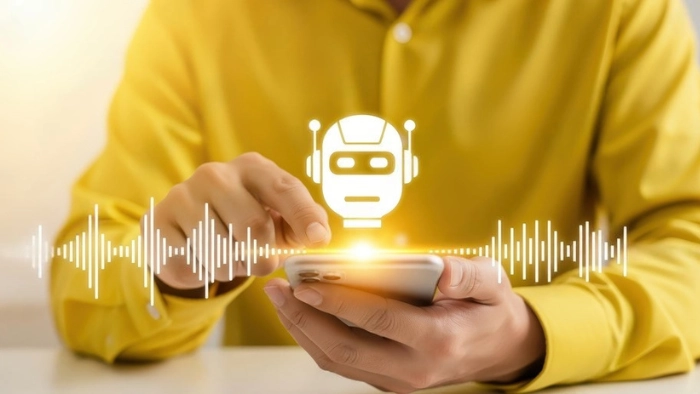
Technical Overview of a Voice Assistant System
Layer | Purpose | Description |
Activation | Wake detection | Identifies trigger phrases |
ASR | Speech recognition | Converts audio to text |
NLP | Language understanding | Extracts meaning and intent |
Context Engine | Memory & continuity | Maintains conversation flow |
Machine Learning | Optimization | Improves accuracy over time |
NLG | Response creation | Generates natural replies |
TTS | Voice output | Converts text to speech |
Challenges That Still Remain
Voice assistants have come a long way, but they have miles to go before we can truly rely on them. Recognition accuracy can degrade with regional accent variations, speech overlapping, or a noisy background. In fact, on longer conversations there are times where the context will be lost and users have to repeat themselves.
This particularly rings true for industries that have regulations around how to handle sensitive information found in voice recordings. Robust encryption, clear standards for data use, and adherence to global data norms are essential for responsible AI deployment.
However, ongoing research has been making improvements which means even higher reliability, personalization, and emotional intelligence.
The Future of AI-powered voice assistants
Voice assistants have to answer the question being asked by them in order to be effective, but the next generation of voice assistants needs to go much further than that.
Emotionally color: Future systems will sense mood, respond with empathy, and learn to map voice to visual understanding and usable devices. Instead of responding to explicit commands, they will anticipate needs.
Voice AI will end up being a central interface for workforce management, analytics, customer engagement, and operational automation in enterprise environments.
Conclusion: Why Voice AI Matters for Your Business
AI-powered voice assistants represent one of the most transformative applications of artificial intelligence. By combining NLP, machine learning, and contextual intelligence, they turn speech into action, complexity into simplicity, and technology into natural conversation.
For businesses, this transformation means faster service, reduced costs, improved customer satisfaction, and scalable operations.
At Abacus Outsourcing, we enable enterprises to design, deploy and optimize voice-based solutions powered by intelligence for real world use cases. Ranging from customer support automation to enterprise-grade conversational AI systems, we provide voice tech reliable, secure and scalable to improve performance and experience.
Is your organization poised to embrace modernization in customer interactions and tap into the world of conversational AI?