



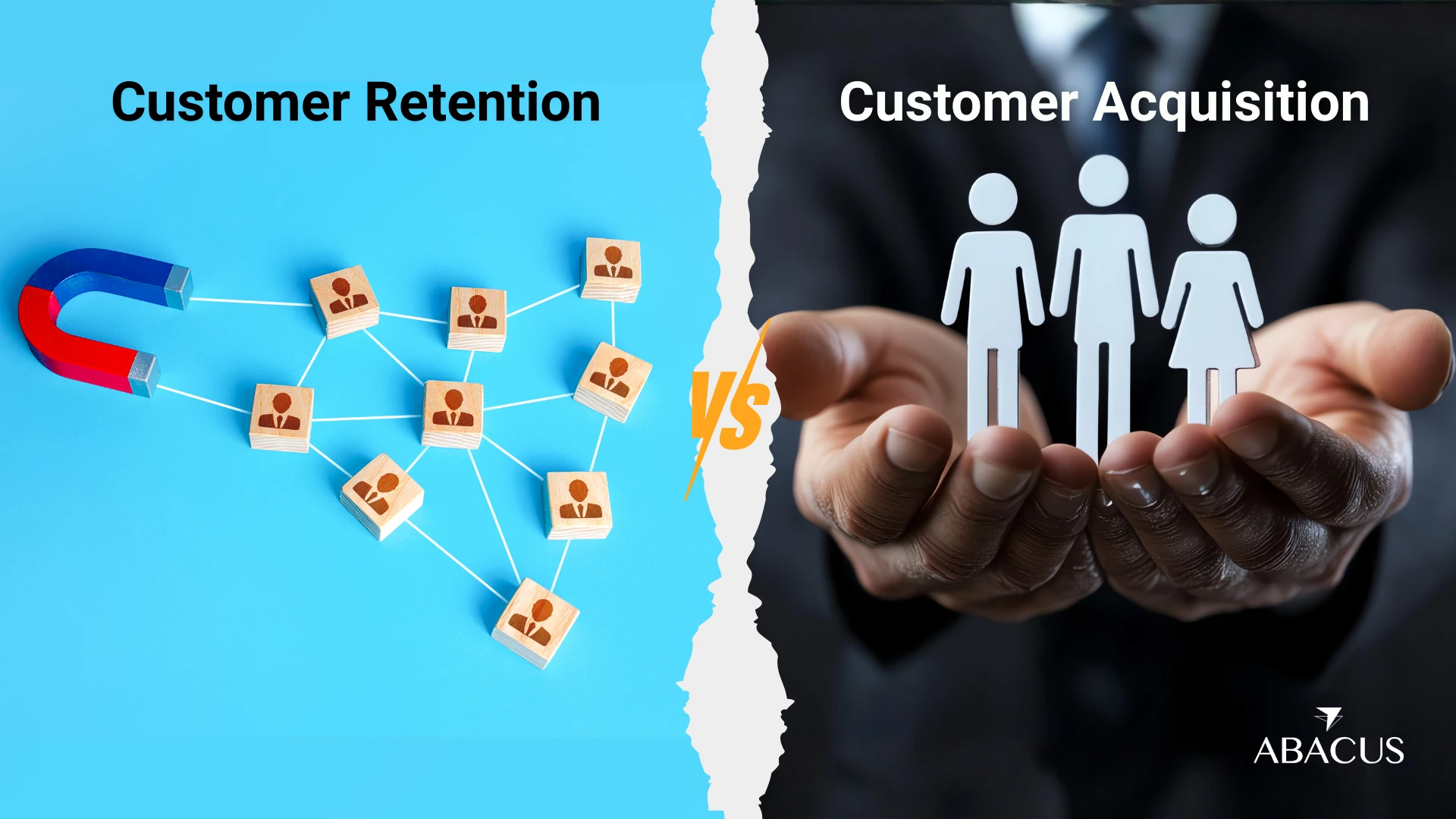
Customer Acquisition vs Customer Retention: What Matters More?
Every business knows the great debate: should you spend more time attracting new customers or retaining existing customers? Many marketing teams spend large budgets on customer acquisition strategies, with the misconception that growth solely relies on the acquisition of new clients. On the flip side, customer experience teams insist on retention, claiming that profitability lies in long-term relationships.
The simple fact is customer acquisition and customer retention are both key for sustainable business development. But knowing how they separate and how to reconcile them is a must for constructing an effective customer model.
In this article, let us discuss the best customer acquisition meaning, acquisition marketing, and tackle apart from acquiring new customers, how far is customer retention going on to be the key to lasting success.
What Is Customer Acquisition?
Customer acquisition is the process of doing just that gaining new customers and turning them into paying customers. These activities may include identifying prospects, developing interest, and persuading prospects to purchase a product or service.
Customer acquisition, in other words, is a definition that describes how an organization attracts new customers using marketing, sales, and outreach activities.
Customer acquisition strategies can include a variety of methods such as digital marketing, referral programs, sales outreach, or partnerships. When implementing a campaign to acquire customers, companies generally use a mix of customer acquisition strategies to attract customers.
Common Customer Acquisition Channels
Here are some examples of how various organizations depend on different channels to enable customer acquisition marketing:
- Content marketing and SEO
- Social media advertising
- Email campaigns
- Paid search marketing
- Telemarketing and sales outreach
When mastered, these tactics make up a full acquisition strategy that allows you to have new prospects coming down the sales funnel.
Understanding Customer Retention
Acquisition is all about getting new customers and retention, as you may guess, is all about keeping the customer. The goal of customer retention strategies is to ensure that buyers are able to buy products or services over time.
As customer retention relates mainly to customer experience, always offer value and remain in contact after the initial sale. To build long-term relationships, businesses frequently utilize loyalty programs, personalized services, and proactive support.

As per research by Harvard Business Review, a mere 5% increase in customer retention rates can add 25% to 95% to your profits. This statistic speaks volumes about the value of long-term customer partnerships.
Retention techniques lower marketing costs since it is usually more expensive to acquire a new customer than keeping your current ones.
Customer Acquisition vs Customer Retention
These two strategies are specifically made for different purposes in the life stage of a business. Here are the key differences in the following table.
Aspect | Customer Acquisition | Customer Retention |
Primary Goal | Gain new customers | Maintain existing customers |
Focus | Marketing and outreach | Customer experience and loyalty |
Cost Level | Generally higher | Typically lower |
Impact Timeline | Short-term growth | Long-term profitability |
Key Metrics | Customer acquisition cost, lead conversion | Customer lifetime value, churn rate |
Acquisition grows the business, while retention makes it scale and grow healthier.
Why Customer Acquisition Is Essential for Growth?
No business can thrive without regularly bringing in new customers. Without ample new customers coming through the door, any company will eventually wither away as customers leave naturally over time, which is why a strong client acquisition strategy is a necessity.
By managing customer acquisition effectively, organizations can focus on deliverables that target a particular segment as well as strategize appropriate messaging and outreach campaigns that can be scaled.
HubSpot research claims that 61% of marketers say generating traffic and leads is their top challenge, highlighting the need for solid acquisition strategies for businesses today.
Most businesses would have to utilize a customer acquisition service with specific protocol or hire a customer acquisition agency to handle them
Examples of Customer Acquisition Strategies
Successful brands are creatively mixing up customer acquisition strategies to get in front of their audiences. For example, SaaS companies often utilize content marketing and webinars to nurture potential buyers, while retail brands typically leverage promotions and influencer marketing to drive footfall.
Others apply retail customer acquisition approaches like loyalty discounts or referral incentives to pull in newcomers.
Such innovative methods of acquiring customers highlight the diversity in approach.
The Financial Advantage of Customer Retention
Acquisition is what led us to grow but retention is your most profitable channel. It is much more expensive to get a new customer than to keep current clients.
As per Invesp, it costs up to five times more to acquire a new customer rather than retaining one. This is the reason that businesses need to pay for the acquisition and retention both; that the cost differs to 5 times.
Retention helps in increasing customer lifetime value, which is the total revenue of a customer earns in a lifetime. Repeat purchases, word of mouth and long-term advocates are made by loyal customers.
This is why retention-focused companies usually enjoy more robust fundamentals.
Balancing Acquisition and Retention
Instead of choosing between acquisition and retention, successful organizations optimize for both.
An ideal customer strategy combines acquisition of marketing with customer experience management. A proper customer acquisition campaign generates new opportunities in the sales funnel, but retention programs make sure those customers stay happy and engaged.
Analytics on customer acquisition are frequently used to compare campaign performance and channel effectiveness. This information allows you to improve marketing campaigns to maximize ROI.
When acquisition and retention strategies are complementary, companies have sustainable expansion and long-term profitability.
The Role of Data in Customer Acquisition
Customer acquisition management today is driven more and more by analytics. For example, companies use metrics like customer acquisition cost, conversion rates, and campaign performance to measure their business strategies.
This allows companies to adjust their client acquisition strategies and allocate resources more efficiently. If a marketing channel is generating high-quality leads, businesses can double down on that channel, for example.
In a similar vein, customer behavior analysis enables organizations to develop better retention strategies by recognizing trends that correlate with and drive loyalty and satisfaction.

Example: Combining Acquisition and Retention
Take for instance a tech company releasing a new piece of software. The company begins an acquisition marketing campaign with digital ads, webinars, and sales outreach to create awareness of the product.
Once customers are onboard, the company shifts its focus to retention, offering onboarding assistance, training resources, and continued engagement with customers.
The retention strategies then mean the company can complement its consistent stream of new customers with satisfied users that return over time.
Which Matters More?
When asking if a project is really about acquisition or retention, the answer is often in which stage of development a business is in.
Again, startups and new companies will focus more on acquisition since they simply need volume. Conversely, legacy businesses generally have larger, more established profit-seeking motives through retention as a means of boosting customer loyalty with existing clients.
But the most profitable businesses understand both are necessary. Retaining Customers Makes You Sustainable, Acquisition makes you grow.
Conclusion: Building a Balanced Customer Strategy
That’s a new game; companies can’t depend on either no-cost customer acquisition; or no-cost customer retention anymore. Both are foundational elements of a solid growth strategy.
Customer acquisition fills the sales funnel with fresh new prospects; customer retention cements relationships that drive up the customer’s lifetime value (CLV). With both techniques, organizations can achieve balance in acquisition to achieve growth in a sustainable manner.
Today, companies that marry the science of customer acquisition marketing with the art of delivering high-value customer experiences, and enable a data-driven decision-making culture, can truly outcompete.
Grow Your Customer Base with Abacus Outsourcing
We make it easier for businesses at Abacus Outsourcing to reinforce their customer acquisition strategy through outreach, telemarketing, and lead generation campaigns.
We focus on customer acquisition services including B2B lead generation, outbound campaigns & customer engagement solutions to help businesses reach the right prospects.
If you are looking for help with customer acquisition campaigns, client acquisition strategies, or scalable customer acquisition solutions you are in the right place.