


Call Center Optimization: Guide to Deliver Faster & Smarter Customer Support
What Is Call Center Optimization?
Call center optimization is the process of improving the efficiency, speed, and quality of your call center. In this process, technology, trained agents, and smart workflows all work together. The main goal is to ensure that customers receive fast and accurate support.
Simply put, building an efficient call center means the right agent, at the right time, reaching the right customer. This is not just about cutting costs but about genuinely improving the customer experience. When BPO operations run smoothly, customers stay satisfied and agents work stress-free.
Why Is Call Center Optimization Important?
The customer is very busy. They do not want to wait long, explain themselves repeatedly, or make multiple calls for one problem. That is why call center optimization is not just an operational need it has become a business survival strategy.
When a call center optimization model is implemented correctly, agents become more confident, handle time decreases, and customer satisfaction scores naturally go up. Research also says that 89% of customers switch companies after one bad support experience.
With a workforce optimization call center approach, companies allocate their manpower better. Agents are available during peak hours and resources are not wasted during off-peak hours. Achieving this balance is the real call center optimization example that works in the real world.
Call Center Optimization vs. Contact Center Workforce Optimization
Call center optimization means making your inbound and outbound calling operations faster, smarter, and more customer-friendly which includes technology, processes, and agent training.
Contact center workforce optimization (WFO) specifically focuses on agent scheduling, performance tracking, and productivity management so that the right number of agents are available at the right time.

Key Differences at a Glance:
Aspect | Call Center Optimization | Optimization Workforce |
Focus | Calls, speed, resolution | Agent scheduling, performance |
Goal | Better customer experience | Efficient team management |
Tools Used | IVR, CRM, AI analytics | WFM software, forecasting |
Key Metric | FCR, AHT, CSAT | Agent utilization, adherence |
Key Areas to Optimize in Your Call Center
The call center optimization process does not happen by fixing just one thing. It has multiple pillars that work together to make the entire system strong. Here are the 4 main areas that should be optimized first.
- CRM Customer Relationship Management system is the backbone on which the entire customer interaction history rests. When an agent receives a call, they can instantly see the customer’s name, history, and previous issues through the CRM.
- For Example Modern CRM tools like Antlere, Salesforce, HubSpot, or Zoho CRM are now very easy to integrate with call center software. Contact center implementation for business is only successful when CRM data is available in real time.
- Artificial Intelligence (AI) is no longer just a future concept it is actively being used in today’s call centers. Chatbots, IVR systems, and AI-powered routing are all driven by AI. Routine queries are handled by AI, and complex issues go only to human agents.
- One powerful use case of AI in call center optimization software is sentiment analysis. It detects in real time whether a customer is frustrated or happy and alerts the supervisor. This way, proactive steps can be taken before the situation escalates.
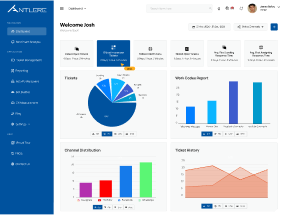
- Reporting and Analytics Tools are very important in a call center. Real-time dashboards allow managers to see which queue has a longer wait time, which agent is underperforming, and what the overall service level looks like.
- Workforce management software allows call centers to smartly handle agent scheduling, forecasting, and shift planning. It ensures that enough agents are available in every shift, not too many and not too few.
Key Metrics for Call Center Optimization
The identity of any efficient call center is defined by its metrics. These numbers are not just data they are a view that shows what your customer experience impacts. These 6 key metrics must be tracked regularly.
Metric | Full Form | Ideal Target | What It Measures |
FCR | First Call Resolution | 70–75%+ | Issue solved in 1 call |
AHT | Average Handle Time | 4–6 mins | Total time per call |
AAR | Average Abandonment Rate | < 5% | Calls dropped by customer |
CSAT | Customer Satisfaction Score | 80%+ | Customer happiness rating |
NPS | Net Promoter Score | 50+ | Customer loyalty index |
AUR | Agent Utilization Rate | 80–85% | Time agent is productive |
First Call Resolution (FCR)
FCR shows how many customers had their issues resolved on the very first call. It is the most important metric because if a customer has to call again, it directly impacts both satisfaction and trust. Higher FCR means better call center services.
To improve FCR, it is vital to give agents proper knowledge base access. When an agent has the right information and tools, they can confidently and quickly resolve the problem.
Average Handling Time (AHT)
AHT is the average time a call takes from start to finish including hold time and after-call work. Higher AHT means the agent is either confused, processes are slow, or systems are not properly integrated.
Reducing AHT does not mean agents can rush calls. It means giving them the right tools and training so they can work efficiently. Smart call routing and real-time guidance tools naturally reduce AHT.
Average Abandonment Rate
When a customer on hold gives up and drops the call, it is called abandonment. This tells you what the wait times look like. If this rate goes above 5%, quick action should be taken.
Callback options and virtual queuing can improve this metric. The customer does not need to wait in line they go about their work and receive a call back when an agent is available.
Customer Satisfaction Score (CSAT)
CSAT is feedback taken directly from the customer usually a quick survey after the call. It is on a scale of 1 to 5 or 1 to 10. This metric tells how the customer felt about the overall experience.
To maintain a high CSAT score, agents’ soft skills are just as important as technical knowledge. Honesty, clear communication, and taking ownership all of these directly improve CSAT.
Net Promoter Score (NPS)
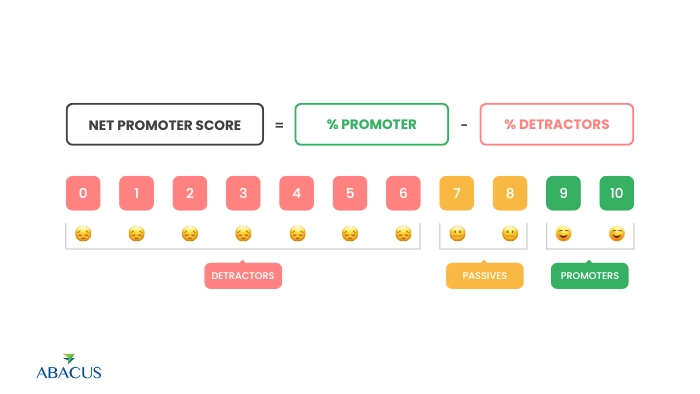
NPS measures mean a customer will recommend your service to their clients or not. It is an indicator of loyalty. The score is on a scale of value 0 to 10 those giving 9 and 10 are Promoters, and those giving 0 to 6 are Detractors.
The difference between NPS and CSAT is that CSAT is about a single interaction, while NPS is about the overall brand relationship. Together, both give a complete picture of what the customer experience actually impacts.
Agent Utilization Rate
Agent utilization rate shows what percentage of their total shift time an agent spends on their work. 80–85% is considered the ideal range going beyond this range creates a risk of agent burnout.
If the utilization rate is low, there is a problem in scheduling or forecasting. If it is too high, agents are overloaded which ultimately impacts quality. Workforce management software directly helps in maintaining this balance.
How the Abacus Enhances Your Customer & Agent Experience
Abacus BPO provides end-to-end contact center solutions to make your entire call center ecosystem smarter. Whether your team is small or large, Abacus tools work for businesses of every size.
Abacus’s AI-powered routing system ensures that every customer’s call reaches the right agent on the first try. Workforce management features make both scheduling and forecasting easy. With Abacus, contact center implementation for business is a smooth experience. Onboarding is quick, integrations are flexible, and the support team is available 24/7.