



The Rise of Automated Branding in Digital Marketing
A decade ago, branding in digital marketing was largely manual graphic designers crafted visuals; marketers wrote copy line by line, and campaign execution involved long hours of coordination across teams. Brands competed to outperform one another through creativity, intuition, and sheer effort.
Fast forward to today, and a profound shift is underway.
Artificial intelligence (AI), machine learning (ML), and advanced automation tools have transformed the way brands shape their identity, reach audiences, and measure brand impact. What was once manual has become automated branding, a blend of technology and strategy that accelerates efficiency, enhances personalization, and enables real-time optimization at scale.
The rise of automated branding solutions is not just a trend it’s a fundamental change in how digital marketing operates. It empowers businesses of all sizes to consistently deliver brand experiences that are relevant, engaging, and measurable across platforms.
In this blog, we explore what automated branding solutions means, why it matters in today’s digital ecosystem, how it works, key benefits, challenges, real-world examples, and where the future is headed.
What Is Automated Branding?
Automated branding refers to the use of technology especially AI, algorithms, and automation platforms, to execute, optimize, and measure brand activities without heavy manual intervention. Instead of design, copywriting, campaign setup, audience targeting, and analytics being done by hand, automated systems take inputs (like brand guidelines, goals, and data) and produce output that aligns with strategic intent.
In essence, automated branding is the intersection of brand strategy and intelligent automation.
Historically, branding focused on human creativity supported by tools. Today, technology increasingly augments creativity, enabling systems to generate brand-consistent content, predict audience reactions, and adjust messaging in real time.
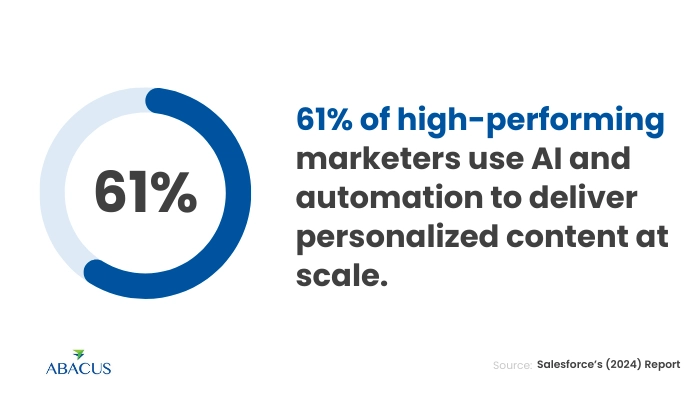
According to Salesforce’s State of Marketing report (2024), 61% of high-performing marketers use AI and automation to deliver personalized content at scale. This reflects automated branding’s growing importance for competitive advantage.
Why Automated Branding Matters Now?
The digital environment has become massively complex. Customers interact with brands across websites, social media, email, messaging apps, digital ads, search engines, and offline touchpoints. Each interaction creates data—data that can be analyzed and acted upon.
But humans alone cannot process and respond to this volume of interactions in real time. Automated branding solutions ensures brand experiences remain:
- Consistent across channels
- Relevant to individual audience segments
- Timely and responsive to user behavior
- Efficient in terms of resource use
A study by McKinsey & Company found that organizations leveraging AI in marketing report up to 20% higher ROI compared to those that do not. By embedding automation into branding, companies unlock data-driven decision-making and responsiveness that was previously impossible.
How Automated Branding Works in Practice?
To better understand automated branding, consider a retail brand launching a new product line:
Step 1: Define Brand Rules
Marketing teams upload brand guidelines—colors, fonts, tone of voice, messaging priorities into an automated branding platform.
Step 2: Set Marketing Goals
Goals such as “increased awareness among women 25-40″ or “boost repeat purchase rates by 15%” are configured.
Step 3: Generate Content at Scale
AI tools to produce banner ads, social media posts, email sequences, and landing page variants all aligned with brand rules.
Step 4: Automate Audience Targeting
Machine learning models for segment audiences, identify high-value user groups, and customize messaging for each segment.
Step 5: Deploy and Optimize
Automation platforms to launch campaigns across channels and continuously optimize based on engagement, conversion rates, and brand sentiment.
This approach reduces cycle time from weeks to hours, minimizes manual errors, and ensures that every touchpoint reflects brand strategy.
The Core Elements of Automated Branding
Automated branding typically includes several integrated components:
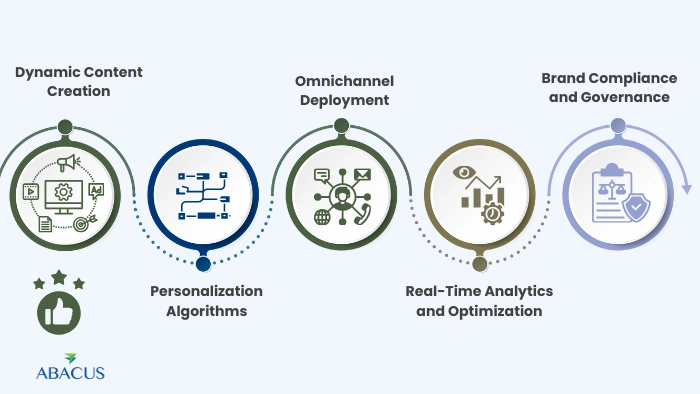
- Dynamic Content Creation: AI-powered tools generate visuals, headlines, product descriptions, and video snippets based on brand parameters and audience context.
- Personalization Algorithms: These engines tailor messaging and content to individual users based on behavior, preferences, and demographic data.
- Omnichannel Deployment: Automated systems publish and optimize brand messaging across platforms, ensuring coherence and continuity.
- Real-Time Analytics and Optimization: Brands can monitor performance metrics and automatically adjust creatives, bids, audiences, and timing for better results.
- Brand Compliance and Governance: Automation ensures that content adheres to brand guidelines and regulatory standards.
Each of these elements reinforces the others. For example, dynamic content creation works together with personalization algorithms to deliver the right message to the right user at the right time.
Table: Traditional vs. Automated Branding
Aspect | Traditional Branding | Automated Branding |
Content Creation | Manual | AI-assisted + scalable |
Personalization | Limited | Hyper-personalized |
Speed | Slow (weeks) | Fast (hours/minutes) |
Channel Consistency | Harder to maintain | Automated enforcement |
Optimization | Periodic | Continuous real-time |
Data Utilization | Retrospective | Predictive & actionable |
This table highlights how automation enhances branding across multiple dimensions.
Challenges and Ethical Considerations
Automated branding offers immense potential, but it’s not without challenges.
One concern is creative authenticity. Audiences still value human nuance, emotional resonance, and cultural sensitivity qualities that pure algorithms may miss without proper guidance.
Another challenge is data privacy and ethics. Personalization relies on data, which must be collected, stored, and used in compliance with regulations like the GDPR and CCPA. Over-personalization can also feel intrusive if not handled sensitively.
Finally, organizations must balance automation with strategic human oversight. While technology can generate and optimize, human vision ensures the brand remains meaningful, differentiated, and aligned with business values.
The Future of Automated Branding
As technology continues to evolve, automated branding will become more immersive and intelligent. We can expect:
- Real-time personalization across video and interactive content
- Emotionally adaptive messaging based on sentiment analysis
- Voice and conversational brand extensions
- Predictive brand health monitoring
- Cross-touchpoint experience orchestration
These advancements will make branding more responsive, customer-centric, and strategic.
Automate with Purpose, Not Just for Efficiency
The rise of automated branding marks a turning point in digital marketing. Brands that harness automation with strategic intent are better positioned to deliver consistent, personalized experiences at scale.
But automation should not replace human insight; it should enhance it. The future lies in human-machine collaboration where technology accelerates execution and people shape vision.
If your business wants to scale branding with precision, agility, and measurable impact, Abacus Outsourcing can help you integrate automated branding into your digital strategy. With expertise in data integration, campaign orchestration, and intelligent automation, Abacus ensures your brand stays relevant in a rapidly changing digital landscape.