



How Corporate Research Associates Support Smarter Decision-Making
Think of it like this: the leadership team has just developed a new product offering, but they have some major questions. Who are the target customers? What attributes are most important to them? How to get the most money possible without turning off price-conscious purchasers. Without the ability to see clearly, the risk of stumbling and making expensive mistakes can be unappealing.
Now picture the same situation with the added support of verified data, market landscape insights, customer sentiment, competitor intelligence, and expert analysis—often delivered by corporate research associates. Decisions aren’t mere hunches anymore; they are evidence-based.
This change from confusion to clarity is where corporate researchers are invaluable. These individuals and teams serve as a strategic extension of an organization, converting complex information into actionable insights to help power smarter decisions across every business line.
In this post we take a closer look at who corporate researchers are, the work they do, how they help enable insight-driven and informed decision making, and why companies – particularly in competitive sectors – cannot afford to underestimate the contribution they (should) make.
What Are Corporate Research Associates?
A Corporate Research Associate (CRA) is a business professional who examines data that led to decisions about the future. This is in addition to the basic data entry type of positions, in that the CRA pulls context and methods into their thinking on a strategy level in order to identify trends, evaluate options and forecast future.
Their work includes market research, competitive analysis, customer insights, operational metrics, financial benchmarks, and trend forecasting. In effect, they serve as internal consultants focusing on the research, which in turn informs leaders to help make more evidence-based decisions, rather than relying purely on intuition.
In companies, corporate research associates generally work in strategic planning or business intelligence departments or the research department. They partner with cross-functional teams to yield timely insights that drive growth initiatives, risk management, and long-term strategy.
Why Data-Driven Decisions Matter More Than Ever
Today in business, speed and accuracy are important. The choices business leaders make today can have a ripple effect tomorrow, even more so in rapidly evolving verticals such as technology, retail, health care and finance.
The following research underscores the relevance of data-based decision-making:
- Companies that rely on data are 5% more productive and 6% more profitable than competitors who don’t, according to a study by MIT Sloan Management Review.
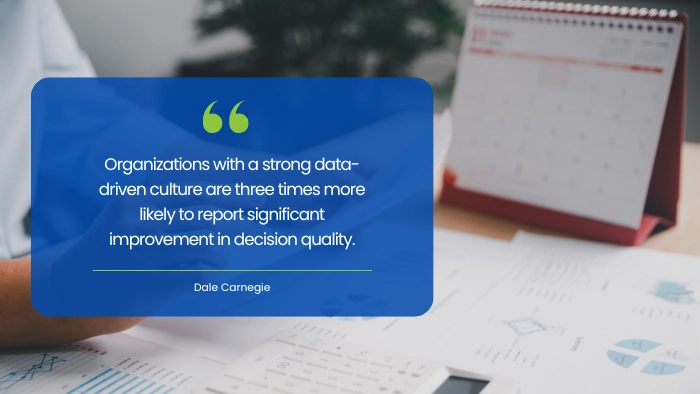
- Organizations with a strong data-driven culture are three times more likely to report significant improvement in decision quality (Forbes Analytics Report, 2023).
- Harvard Business Review reports that decisions based on data are not only faster but lead to better outcomes and lower organizational risk.
This shows that efforts to move beyond a world of unprecedented complexity and competition are better off relying on decisions based on evidence, not guesswork.
How Corporate Research Associates Enhance Decision-Making
Corporate research associates facilitate better decisions with a blend of methods, analytic frames, and strategic judgment. Instead of simply giving you numbers, they add meaning, giving data a purpose. Here’s how they add value:
1: Market Understanding and Competitive Intelligence
Companies need to know the lay of the land before they expand into new markets or introduce products and services. A CRA engages in extensive market research, which demonstrates that:
- Market size and growth trends
- Customer preferences and pain points
- Competitor strengths and weaknesses
- Pricing dynamics
- Regulatory or cultural barriers
This high-quality intelligence underpins strategic planning and risk management, enabling decisions to be taken with a clear view of the environment outside.
For instance, a consumer electronics company seeking to expand into Southeast Asia will need market research in order to identify what features of its products appeal to the local community compared to global standards. Without such knowledge, however, the arrival of those new products may well be a catastrophe that has cost millions.
2: Customer Insights That Drive Personalization and Retention
Companies with a deep understanding of their customers outperform the competition. Customer insight data has never been more important. 76% of customers now expect companies to understand their needs & expectations (Salesforce State of the Connected Customer report).
Company researchers institutionally collect and analyze customer satisfaction surveys, behavioral data churn indicators, and sentiment analysis to inform:
- Customer segmentation
- Personalization strategies
- Product enhancements
- Retention initiatives
This level of understanding enables businesses to create experiences that respond to actual customer needs, rather than guesswork.
3: Forecasting and Trend Analysis
In fast-moving fields, such laggard indicators aren’t good enough. CRAs develop predictive models that pick up on patterns before they play out in full. This helps management to see opportunities and risks earlier, so that they can make proactive adjustments to the strategy.
For instance, a forecast of trends might suggest that demand is increasing for eco-friendly packaging in retail. If proactive, a company can adapt in advance of its rivals, win market share and entrench brand supremacy.
According to Accenture, those using predictive modeling are twice as likely to outperform their peers in achieving profitable growth.
4: Operational Efficiency and Performance Metrics
In addition to markets and customers, internal teams use CRAs to increase performance. They examine operational parameters process choke points, cost bases, cycle times and quality indicators to inform efficiency campaigns.
It is this analysis that provides rational based enhancements over knee jerk fixes. For instance, a company research analyst exploring call center data might uncover inefficiencies that occur during its busiest times and suggest staffing changes or procedural adjustments to speed up how long customers have to wait.
5: Risk Management and Scenario Planning
Every business decision carries risk. Enterprise risk managers evaluate known risks (like compliance or fragility in the supply chain) as well as emerging risks (things like changes to customer behavior, geopolitical matters). They use scenario planning to consider what different choices might look like under different conditions.
This enables leadership to act decisively and confidently, even given an uncertain landscape.
Firms that actualize formal risk assessments in their decision-making process would be more resilient regarding disruptions.
Methods and Tools Used by Corporate Research Associates
In order to provide good support for decision-making, CRAs use several techniques in research and analysis:
- Quantitative data analysis: Using statistical software to identify patterns and correlations
- Qualitative research: Interviews, focus groups, and thematic analysis
- Market segmentation: Grouping customers to tailor strategies
- Benchmarking: Comparing performance against industry standards
- Data visualization: Presenting complex insights in digestible formats
- Survey design and analysis: Measuring attitudes, preferences, and satisfaction
These applications allow CRAs to not just collect data, but to interpret it in a way that decision makers can use.
Real-World Examples: Research-Led Decisions That Paid Off
Technology Adoption in Healthcare
A major provider of healthcare services was feeling challenged in determining whether they should make an investment in a new electronic health records (EHR) system. In a comprehensive study by corporate researchers, looked at:
- Workflow disruptions due to existing systems
- Comparative analysis of EHR vendors
- Cost-benefit projections
- Staff readiness and training needs
The insights illuminated a path that made sense: A phased approach with minimal disruption and maximum adoption. This led to increased clinician satisfaction and reduced administrative burden that had a direct positive impact on patient care outcomes.
Retail Expansion Based on Consumer Insights
A U.S. retail brand was contemplating prospective stores in multiple states, but it lacked certainty about demand from customers. One research associate sifted through demographic, economic, and competitor data and conducted consumer preference surveys.
The results whittled a list of possible regions, projected revenue forays, and armed leadership with information to negotiate leases or guess space needs. In place of overextending, the company opened stores in areas that had strong demand indicators, thereby profitably expanding from day one.
A Table: How CRAs Add Value to Decision Areas
Decision Area | Value Delivered | Example Outcome |
Market Entry | Identify size, growth, competitors | Select optimal launch cities |
Product Development | Define features customers will pay for | Higher adoption and lower return rates |
Customer Experience | Reveal pain points & needs | Improved CSAT and NPS scores |
Operational Efficiency | Diagnose process gaps | Faster turnaround and lower costs |
Risk Planning | Model adverse scenarios | Contingency investment and stability |
This table illustrates how CRAs operate at the intersection of information and action.
Why Many Businesses Underutilize Research Insights
Although the influence of research on outcomes has been demonstrated, there are still many institutions that under invest in formal research positions. Some common barriers include:
- Viewing research as an expense rather than an investment
- Believing intuition is sufficient
- Lack of clarity on how to implement research findings
- Organizational silos that limit data sharing
They also illustrate the conditions why research requires a well-defined value-driven leadership, embedding in decision-flows and alignment with corporate goals.
Statistics That Highlight Research Impact
To put the importance of a research-driven decision in perspective, take for instance these industry statistics:
- MIT Sloan found data-driven companies are 23 times more likely to acquire customers and 6 times more likely to retain them than peers relying on intuition.
- Forrester reports that 74% of business leaders say improved analytics and research directly supports competitive advantage.
- Companies using structured market research are twice as likely to launch successful products compared to those using informal insights (Source: Nielsen)

These numbers reveal that research isn’t just valuable – it’s associated with demonstrable business success.
How Abacus Outsourcing Enhances Strategic Research and Decision-Making
For most institutions, there are gains to be had by adding some outside expertise to internal research. Enter Abacus Outsourcing with specialized research support that augments internal capabilities and compresses decision cycles.
Abacus Outsourcing provides data collection, analysis, reporting, and strategic synthesis that:
- Improves leadership confidence in choices
- Reduces time spent gathering and validating data
- Enhances cross-functional alignment with actionable insights
- Strengthens responsiveness to market changes
Abacus incorporates research into daily operations and longer-term planning to ensure businesses are turning information into a competitive advantage.
Conclusion: Build Smarter Decisions with Research Expertise
In a world of constant disruption and intense competition, decisions can’t be made in isolation. Our corporate research associates equip companies to address complexity, clarity and evidence of business with assurance. They make businesses smarter by turning raw data into meaningful insights – which enables innovation, mitigates risk, and serves customers better.
The era of guesswork is over. The best decisions made today are strategic, informed, and research led.
If your team is looking to make better decisions, faster and wants to be sure that every strategic move is supported by data, not guesswork-Abacus Outsourcing provides professional research and analytics know-how so you can win.