On this page
- What Is a Multichannel Contact Center?
- What Is an Omnichannel Contact Center?
- Key Features of an Omnichannel Contact Center
- Multichannel vs Omnichannel Contact Center: Key Differences
- Best Features of Every Multichannel Contact Center
- Which One Does Your Business Need?
- How Abacus Outsourcing Reshapes The Customer Experience
Imagine a customer chatted with your support team on Monday about a billing issue. On Wednesday, they called your helpline, and the agent asked: "Can you explain your issue?" All over again. From scratch.
That single moment can cost you a loyal customer. This article breaks down the real difference between a multichannel contact center service and an omnichannel contact center, what they mean, how they work, what features matter most, and which one actually fits your business right now.
What Is a Multichannel Contact Center?
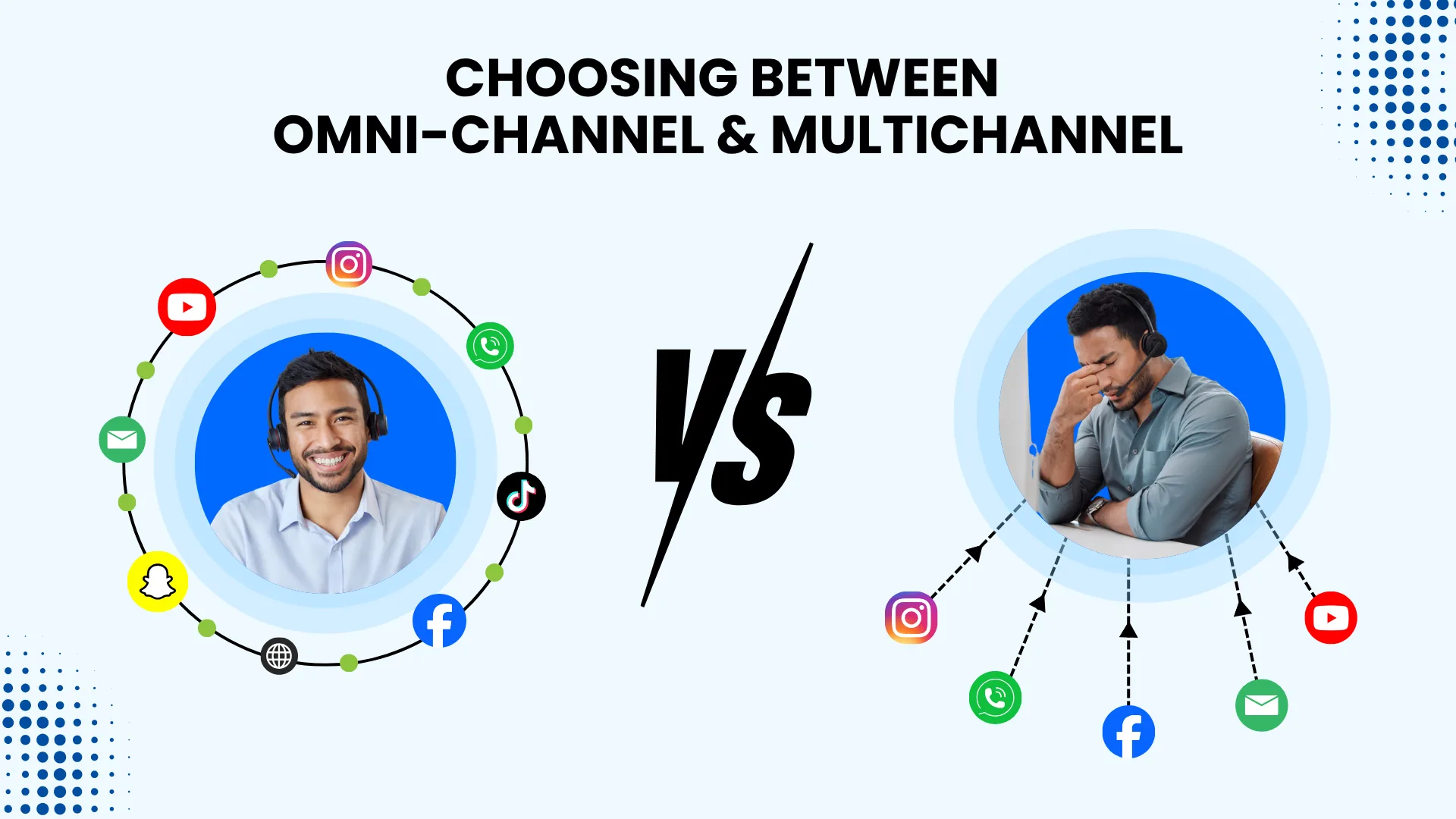
A multichannel contact center is a customer service setup where a business communicates with customers across multiple channels: phone, email, live chat, social media, SMS, and WhatsApp. Customers get to choose how they reach out, which is a big win for accessibility and convenience.
In a BPO contact center, each channel operates independently. There is no shared data between them. If a customer emails your team and then calls an hour later, the phone agent has zero visibility into that email conversation. Every channel works in its own silo.
Think of it this way: many doors into the building, but each door leads to a completely separate room.
What Is an Omnichannel Contact Center?
An omnichannel contact center connects all communication channels into one unified platform. Phone, email, live chat, and social media all feed into a single system and every customer interaction is tracked in one place from start to finish.
When a customer contacts you on any channel, the agent sees the full history of previous chats, emails, call notes, everything. The customer never has to repeat themselves. That is the core promise of omnichannel, and it is what makes it a fundamentally different experience from multichannel.
Key Features of an Omnichannel Contact Center
- All channels are integrated into one unified platform
- Agents get a complete 360-degree view of every customer
- Customers switch channels without losing any context
- AI-powered routing sends customers to the right agent every time
- Real-time analytics and customer sentiment analysis across all channels
Multichannel vs Omnichannel Contact Center: Key Differences
|
Feature |
Multichannel |
Omnichannel |
|
Channel Integration |
Separate and siloed |
Fully unified platform |
|
Customer History |
Stored per channel |
One complete history |
|
Agent View |
Single channel only |
360° full customer view |
|
Setup Cost |
Lower and simpler |
Higher but stronger ROI |
|
Customer Experience |
Fragmented at times |
Seamless and connected |
|
Channel Switching |
Customer repeats the issue |
No repetition needed |
|
Best For |
Small or new businesses |
Scaling or larger businesses |
|
Technology Needed |
Basic software |
Advanced integrated platform |
Best Features of Every Multichannel Contact Center
A reputable BPO Company is not just about being accessible on multiple channels it is about managing every point smoothly so no customer request ever gets missed. Here are the main features that make it work:
1. Voice (Call Support)
Voice is still the most trusted channel for complex or sensitive issues. In a multichannel contact center, the phone system handles both inbound and outbound calls with features like IVR (Interactive Voice Response), call routing, call recording, and queue management. Customers who favor speaking to a real person always have this option on-hand and for others, it remains their first choice.
2. Live Chat Support
Live chat support allows customers to get quick answers without picking up the phone. It works directly on your website or app and agents can handle multiple conversations at the same time making it one of the most cost-saving channels available. Many multichannel contact center software solutions also include pre-written responses and chatbot support to speed up resolution time.

3. Email Support
Email is one of the most commonly used multichannel contact center channels for comprehensive queries, complaints, and documentation. It gives customers time to explain their issue thoroughly and gives agents the space to research and respond accurately. A ticket management system attached to email ensures nothing falls through the cracks and every query receives a proper follow-up within a set timeframe.
4. Social Media
Customers today expect brands to respond on platforms like Facebook, Instagram, Twitter/X, and LinkedIn. A multichannel contact center checks these social media contact points and routes direct messages and comments to the right agent. Fast and responsive social media replies build public trust and show that your brand is genuinely listening, not just posting.
5. SMS and WhatsApp Support
SMS and WhatsApp have become widely used multichannel contact points for fast updates, appointment reminders, and order notifications w. Customers appreciate getting help on the same apps they already use every day. These channels also work well for proactive outreach without feeling intrusive or overwhelming.
6. Ticketing and Case Management
Behind every customer interaction is a ticket. A solid multichannel contact center tracks every query regardless of which channel it came from through a structured ticketing system. Each ticket has a status, priority level, assigned agent, and resolution timeline. This keeps multichannel contact center operations structured and ensures no customer query ever gets lost or left unanswered.
7. Chatbots and Automation
Modern multichannel contact center technology contains an AI-powered chatbot that handles routine queries automatically, like FAQs, order tracking, and password resets, without involving a live agent. This cuts the workload on your team notably and gives customers quick answers at any hour, even outside business hours.
Which One Does Your Business Need?
When To Choose Multichannel:
- Your business is new or in early growth stages
- Customer volume is manageable and channel switching is rare
- Budget is limited and complex integrations are not feasible yet
- Your customers mostly stick to one preferred channel
- You want to build a strong foundation before scaling further
When To Choose Omnichannel
- Your customer base is large and uses multiple channels regularly
- Customer satisfaction scores are dropping, and churn rates are increasing
- Agents are wasting time on context that should already be visible to them
- You are scaling and want to invest in long-term retention and brand loyalty
- You need real-time data across all channels to make faster decisions
A smart approach? Start with multichannel to build solid operations and processes. Then migrate toward omnichannel as your business grows. It is realistic, cost-effective, and sustainable for most teams.
How Abacus Outsourcing Reshapes The Customer Experience
At Abacus BPO, we help businesses build customer support operations that actually deliver results. Whether you need a multichannel setup or a fully connected omnichannel experience, our trained agents handle everything, voice, email, live chat, and social media with consistency and professionalism that your customers will notice.
Ready to transform your customer experience?
Abacus BPO is here to make it happen. Let us take care of every interaction so you can focus on growing your business.