On this page
- The Quick Answer: Difference Between SaaS and GaaS
- What Is SaaS? How It Works and Why It Won
- What Is GaaS? The GaaS Meaning Explained
- How GaaS Works Behind the Scenes
- Types of GaaS You Will See in the Market
- SaaS vs GaaS Side by Side
- GaaS vs Traditional SaaS: Where the Money Moves
- How SaaS Turns Into GaaS After AI
- What Is the Difference Between AI and SaaS?
- Is SaaS Growing or Dying?
- Why GaaS Matters: Benefits for Businesses Worldwide
- SaaS vs GaaS in BPO: The Angle Most Guides Skip
- The GaaS Business Model: What Providers Must Get Right
- Risks and Governance You Cannot Skip
- SaaS vs GaaS: How to Choose
- Final Thoughts
- Frequently Asked Questions
For two decades, software companies sold you a login. Now some of them are starting to sell you the finished job. That one change sits at the heart of SaaS vs GaaS, and it matters more to BPO leaders than to almost anyone, because BPO has always been the business of finished jobs.
This guide explains both models in plain language, shows where they overlap, and tells you honestly where the hype ends. Whether you run a contact center, a back office team, or a vendor management desk, you will leave knowing what to ask your next technology partner.
The Quick Answer: Difference Between SaaS and GaaS
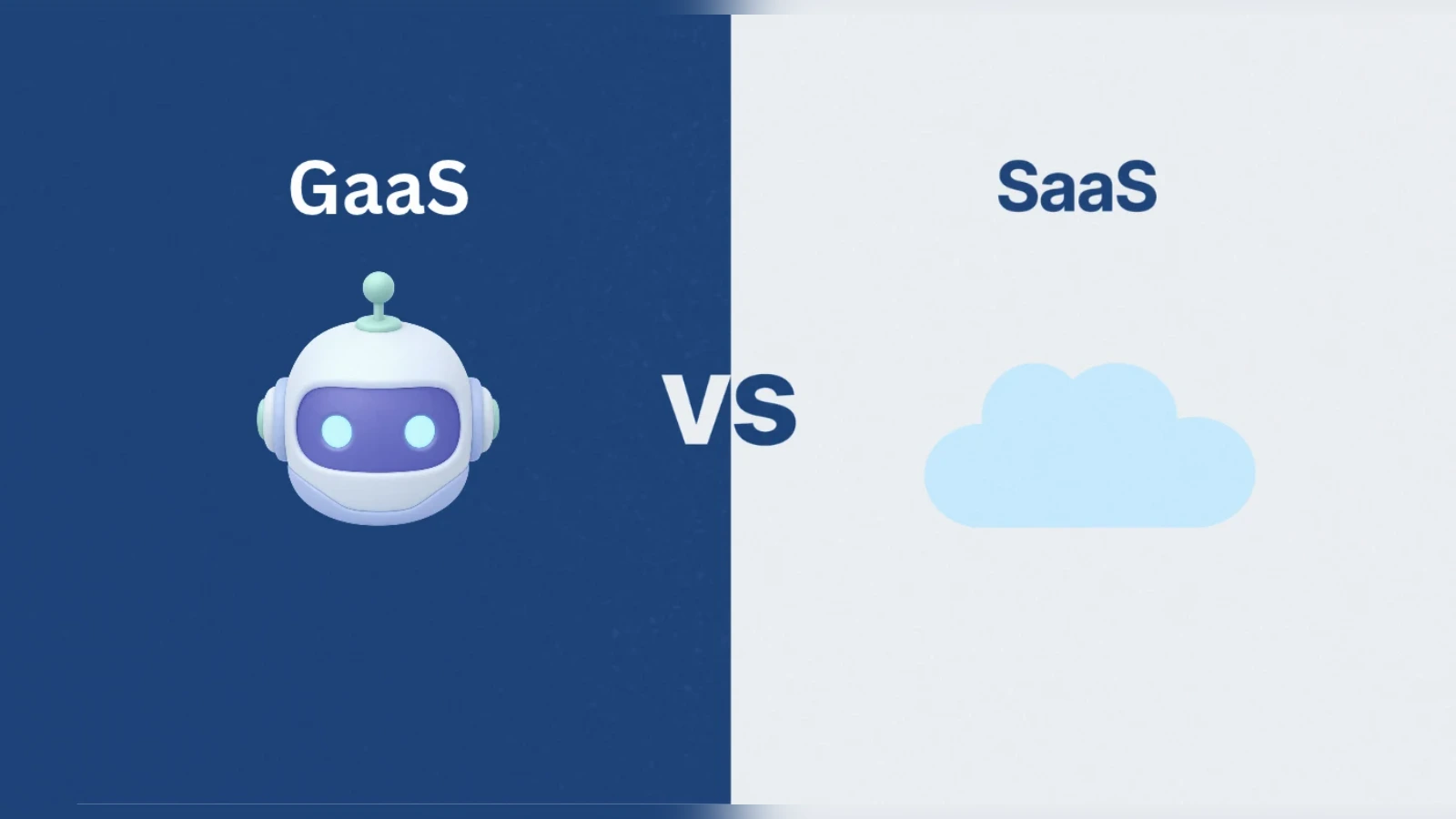
SaaS is a rental car. You still drive. GaaS is a chauffeur who knows the route and calls you when a road is closed.
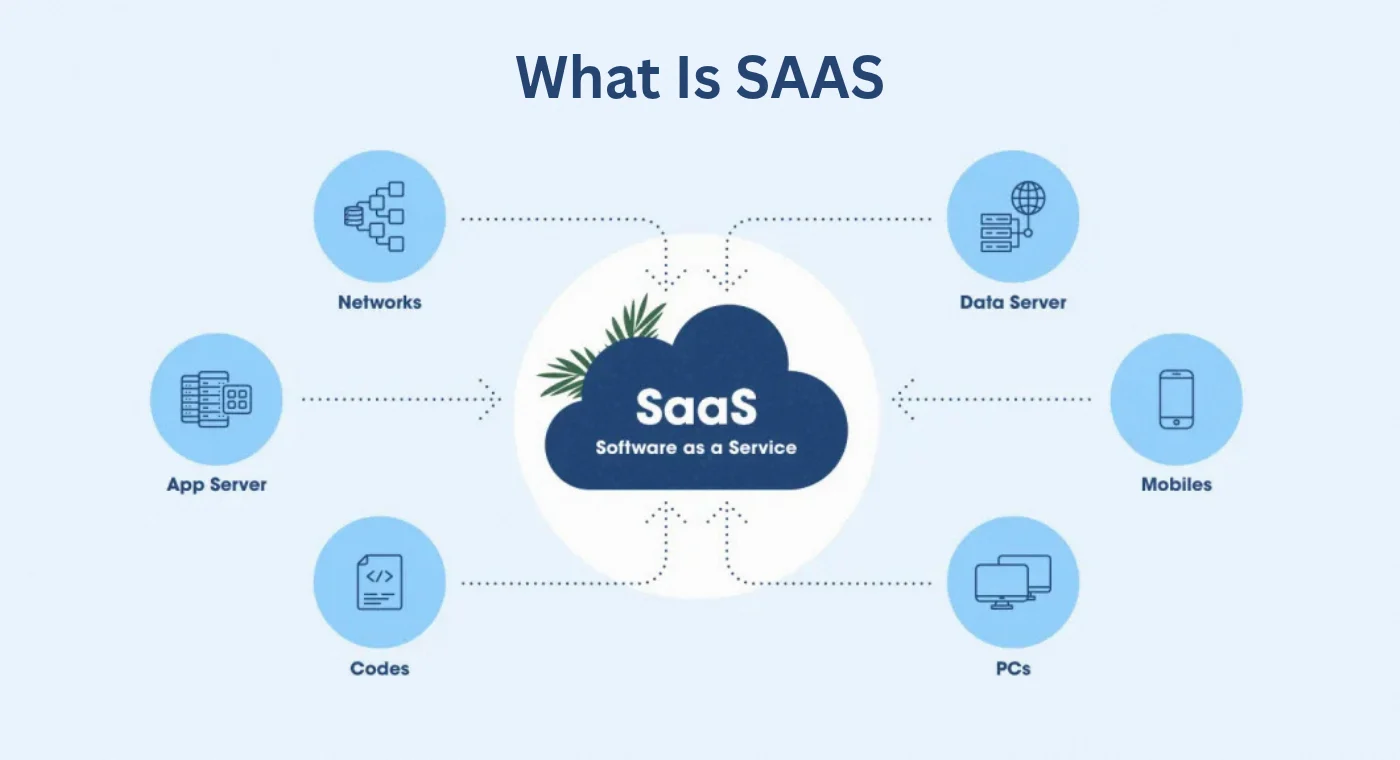
In practical terms, SaaS means you rent software that a vendor hosts. Your team logs in, clicks through screens, and does the work. GaaS means you rent a capability. A managed AI agent takes a goal, uses software and tools on your behalf, and hands back a result or an exception for a person to review.
So SaaS sells access to tools, and GaaS sells completed work. Everything else in the SaaS vs GaaS debate, from pricing to risk, follows from that split.
A quick note on naming. GaaS has no official standard definition yet. Most often it stands for Agentic as a Service, also written AGaaS. You will also see it called Generative Agent as a Service or AI agents as a service. In startup circles, some people use GaaS to mean Growth as a Service, which is a different idea. In this article, GaaS means managed, agent-driven work.
What Is SaaS? How It Works and Why It Won
Software as a Service is a cloud model where a provider hosts an application, and customers use it over the internet, normally for a subscription. The formal cloud definitions come from NIST, and SaaS is one of its core service models.
The vendor looks after servers, updates, security patches, and uptime. You look after users, settings, and your own data. Most SaaS products run one shared codebase for many customers, which is why an update reaches everyone at once and why prices can stay low.
SaaS won because it removed three headaches: installation, upfront cost, and slow upgrades. A finance team could start using a tool the same afternoon.
The classic SaaS pricing model follows the same logic. You pay per seat, per month or per year, often with tiers that unlock features. That model rests on one quiet assumption: more employees means more licenses. Hold on to that assumption, because AI is the thing that breaks it.
SaaS also comes in two flavors. Horizontal SaaS serves every industry (email, CRM, accounting). Vertical SaaS serves one industry (claims software for insurers, dispatch software for logistics). Both still need a person to operate them.
What Is GaaS? The GaaS Meaning Explained
The GaaS meaning in one line: a service in which managed AI agents perform bounded work for you. The word that matters is bounded. The agent works inside limits you set, such as which systems it may read, which it may change and what needs a human sign-off.
The provider typically runs the models, the agent instructions, the connections to your tools, task memory, monitoring and updates. You supply the goal, the business rules, the data access and a named person who is accountable for results.
Here is a simple example. Suppose the goal is: “Match incoming invoices to purchase orders, flag mismatches, and queue the clean ones for approval.” A SaaS tool gives your accounts team a screen to do that. GaaS gives them the finished queue, plus a short list of oddities.
This is also why GaaS is not just a chatbot with a nicer name. A chatbot answers. An agent acts, checks what happened, tries the next step or stops and asks for help.
How GaaS Works Behind the Scenes
Under the hood, most agent services follow a loop like this:
- Goal intake. A person, a schedule or another system hands over the task.
- Planning. The agent breaks the goal into steps and picks which approved tools to use.
- Action. It reads records, drafts content, updates fields or sends approved messages.
- Checking. It tests its own output against rules, sources and confidence thresholds.
- Handoff. If it is unsure, or the action is sensitive, it routes the case to a human.
- Logging. Every step is recorded so a reviewer can see what happened and why.
This is where AI workflow automation differs from older automation. A traditional script follows a fixed path and breaks when the input changes. An agent chooses part of its path while it works, inside guardrails.
Autonomy is a dial, not a switch. Truly autonomous AI agents that run without any oversight are rare in business today. Most real deployments sit in the middle, with the agent handling routine volume and people handling judgment. Gartner expects at least 15 percent of day to day work decisions to be made autonomously through agentic AI by 2028, up from almost none in 2024. That is meaningful, and it also means 85 percent still involves people.
Types of GaaS You Will See in the Market
Not every agent service is built the same way. These are the five patterns buyers meet most often:
Type | What it does | Example in a BPO setting |
|---|---|---|
Task agent | Handles one narrow job | Tags and routes incoming support emails |
Workflow agent | Runs a multistep process across systems | Takes an order from intake to invoice |
Role-based agent | Covers a defined job role | Tier 1 support agent for common questions |
Multi-agent team | Planner, specialists and a reviewer working together | Claims intake, document checking and fraud screening |
Managed hybrid service | Agents do the volume, trained people handle exceptions | Outsourced back office with AI doing first pass work |
There is also a delivery split. Some GaaS is embedded inside a SaaS product, some is a standalone agent platform, and some is operated end to end by a service provider. That last group is Managed AI services, and it is the one BPO companies know best.
SaaS vs GaaS Side by Side
Here is the SaaS vs GaaS comparison most buyers want on one page.
Area | SaaS | GaaS |
|---|---|---|
What you buy | Access to a software application | A managed agent capability |
Who does the work | Your employees | The agent, with people reviewing |
Interface | Dashboards, menus, forms | Goals, approval queues, exception inbox |
Process path | Fixed by the product design | Partly chosen by the agent within limits |
Typical pricing | Per seat or tiered subscription | Subscription plus per task, per run or per outcome |
Success metric | Logins, feature use, retention | Accepted outcomes, error rate, cost per result |
Main risk | Outages, bugs, bad configuration | Wrong decisions, wrong tool use, false completion |
Accountability | Customer operates, vendor hosts | Shared, and must be written into the contract |
Best for | Direct control and systems of record | Repeatable multistep work across systems |
Callout: These are tendencies, not walls. A modern product often blends both.
GaaS vs Traditional SaaS: Where the Money Moves
The sharpest edge in GaaS vs traditional SaaS is money. Seat pricing works when humans do the clicking. When an agent does the clicking, fewer seats are needed and the vendor’s revenue stops tracking headcount. Gartner’s Brocklehurst described this as breaking the link between user growth and revenue growth.
That is why vendors are testing outcome-based pricing. You pay when a defined result happens, not when a person opens an app.
A real example: Intercom charges $0.99 per outcome for its Fin support agent, and bills at most one outcome per conversation. Its help documentation defines a resolution as a case where no further help is requested after the last AI answer. Notice what that tells you. “Outcome” is a contract term, and the definition decides your bill.
Before you sign any outcome deal, get written answers to these:
- What exactly counts as an outcome?
- Are failed or abandoned runs charged?
- Who pays when a human has to correct the result?
- How are duplicate actions handled?
- How is quality measured, and by whom?
Most real contracts today are hybrids: a base subscription plus usage or outcome fees. Pure outcome pricing is still the exception.
How SaaS Turns Into GaaS After AI
SaaS does not flip into GaaS overnight. It tends to move through five stages:
- AI features. Summaries, search and suggestions appear inside the product.
- Copilots. A chat assistant helps the user operate the product faster.
- In product agents. The assistant can take actions, with approval, inside the product.
- Cross system agents. The agent works across several applications to complete one goal.
- Managed service. The vendor runs the agent, monitors it, and charges for results.
Most vendors sit at stage two or three today. Gartner expects 40 percent of enterprise applications to include task specific AI agents by the end of 2026, up from under 5 percent in 2025.
The catch is that a chatbot bolted onto a menu is not GaaS. The test is simple: can the system pursue a goal through actions and observations within limits, and show you evidence of what it did? If not, it is SaaS with an AI feature, which is useful, but a different thing.
What Is the Difference Between AI and SaaS?
People compare these two as if they compete. They do not. They answer different questions.
Question | SaaS | AI |
|---|---|---|
What is it? | A way of delivering software | A capability that predicts, generates or decides |
What does it describe? | Where software runs and who maintains it | What software can do with data |
Can it exist alone? | Yes, with no AI at all | Yes, outside any SaaS product |
Example | A hosted accounting tool | A model that reads and classifies invoices |
SaaS is the delivery wrapper. AI is the engine. GaaS is what you get when you put the engine inside the wrapper, add tool access and permissions, and then operate it as a service. That last part is the hard bit, and it is where the service layer matters as much as the model.
Is SaaS Growing or Dying?
Both stories are partly true, which is why headlines about it are so confusing.
Growing. Fortune Business Insights puts the global SaaS market at $315.68 billion in 2025 and $375.57 billion in 2026. Other research firms publish higher figures, with some estimates for 2026 above $460 billion, because they define the market differently. The direction agrees even when the numbers do not.
Under pressure. Gartner’s July 2026 research says up to $234 billion of enterprise application software spending is exposed to what it calls agentic arbitrage by 2030. That happens when agents complete tasks across many applications, so fewer people need to log in to each one.
So SaaS is not dying. Hosted software is still the place where records live and actions are carried out. What is weakening is the seat count as a growth engine, and vendors that depend on dashboards and per user fees have the most to worry about. Gartner’s advice to those vendors is to move from interface based value to outcome based value.
The healthy reading: SaaS is being repriced and re-layered, not deleted.
Why GaaS Matters: Benefits for Businesses Worldwide
When GaaS is applied to the right process, the gains are practical:
- Speed. Routine steps finish in minutes instead of waiting in a queue.
- Coverage across time zones. Agents work through the night, which suits global operations.
- Consistency. The same rules are applied the same way on the thousandth case as on the first.
- Scalability. Volume spikes need capacity, not a hiring round.
- Better use of people. Staff spend time on exceptions, relationships and judgment.
- Cleaner data. Every action is logged, which helps audits and quality reviews.
For smaller companies the benefit is access. A business with no operations team can now buy AI-driven business operations as a service instead of building a department. For large enterprises, the benefit is cost per accepted outcome falling over time.
One honest caution: these gains depend on picking processes that are repeatable, measurable and reviewable. Gartner estimates that AI inference costs per agentic workflow will rise more than fivefold by 2028 as tasks become more complex, so the savings are not automatic.
SaaS vs GaaS in BPO: The Angle Most Guides Skip
Most articles on this topic are written for software founders. BPO leaders face a different version of the same question, and it deserves its own look.
The market context. Grand View Research values the global BPO market at $328.4 billion in 2025, $358.6 billion in 2026, and nearly $696 billion by 2033, a compound growth rate of 9.9 percent. AI is one of the main drivers named in that growth, not only a threat to it.
Software vs managed services. BPO is the original managed service. For decades, BPO providers sold people, process and a service level agreement. SaaS vendors sold tools and left the work to the customer. GaaS pulls the software side toward the BPO side: software that does the work, with a service layer around it. The two are converging from opposite ends.
Where each model fits inside a BPO workflow:
BPO task | SaaS approach | GaaS approach | Human role that remains |
|---|---|---|---|
Customer support | Help desk software, agents reply | Agent resolves routine cases, hands off the rest | Complex, emotional or high value cases |
Invoice processing | Accounting tool, staff key in data | Agent extracts, matches and flags errors | Exception review and approvals |
Claims intake | Forms and workflow software | Agent checks documents and completeness | Judgment calls and fraud signals |
Data entry and cleanup | Spreadsheet or database tool | Agent standardizes and validates records | Quality sampling and rule updates |
Payroll and HR queries | HR portal | Agent answers and updates records | Sensitive cases and policy questions |
What changes commercially. BPO has long priced by the hour or by full time equivalent. GaaS pushes toward pricing per resolved ticket, per processed document or per accepted outcome. That favors providers who know their cost per outcome and can guarantee quality.
Where BPO keeps an edge. Running a process well is more than running a model. Training, quality assurance, compliance, escalation and handling edge cases are the exact skills that make agent services trustworthy. A pure software vendor has to build that muscle from nothing. An experienced BPO partner already has it, and can combine business process automation with a trained human layer.
Where the pressure is real. Routine, high volume, rules based work is the most exposed. Providers who only sell hours of that work will feel it first. The shift to watch is from headcount to outcomes.
The GaaS Business Model: What Providers Must Get Right
If you are buying GaaS, it helps to understand how the seller makes it work. The GaaS business model is hard to run well, and the failure points are predictable.
Draw a clear service boundary. A provider must state what the software does, what the agent does and what a human does. When that line stays vague, “just one more” manual step creeps in, revenue rises and margins do not.
Keep two promises separate. Platform uptime is one commitment. Service completion time and accuracy is another. Mixing them into one service level agreement makes failures impossible to explain to anyone.
Know the unit economics. Each outcome carries model costs, tool costs and human review time. A provider that cannot tell you its cost per accepted outcome is guessing.
Make every action auditable. Logs should show which agent acted, on which account, with which tool and what it changed.
Version everything. A model or prompt update can change results without changing the screen. Material changes should be tested before release.
Risks and Governance You Cannot Skip
The excitement is real, and so is the failure rate. Gartner predicted in 2025 that over 40 percent of agentic AI projects will be cancelled by the end of 2027, citing rising costs, unclear value and weak risk controls. It also warned about agent washing, where vendors relabel chatbots and basic automation as agents. Gartner estimated that only about 130 of the thousands of vendors using the word were offering real agentic capability.
Ask every vendor about:
- Permissions. Does the agent get only the minimum access it needs?
- Data flow. Where does your data travel: model provider, tool servers, memory stores?
- Escalation. What happens when the agent is unsure?
- Retries and loops. How are repeated or duplicate actions prevented?
- Accountability. Who owns a wrong action, in writing?
For technical review, NIST’s zero trust guidance and the OWASP API Security Top 10 are widely used baselines, because agents increase the number of connections and trust boundaries in a system.
SaaS vs GaaS: How to Choose
The honest answer to SaaS vs GaaS is often “both.” Use this checklist:
Choose SaaS when:
- The process is simple or rare
- Users need direct control
- A good interface already solves the problem
- Mistakes would be hard to spot
- You have no way to monitor agent behavior
Choose GaaS when:
- The task repeats often and spans several systems
- The path varies a little each time
- Results can be measured and checked
- Actions are reversible or reviewed
- The provider can show exactly what the agent did
Choose a hybrid when your SaaS stays as the system of record while a managed agent works across it. For most BPO clients, this is the realistic starting point.
Final Thoughts
SaaS vs GaaS is not a fight with one winner. SaaS gave businesses software they could rent. GaaS is starting to give them work they can delegate. The companies that benefit most will treat agents like new team members: clear job, clear limits, clear review.
For BPO, the message is encouraging. The skills that built the industry process discipline, quality control, and accountable delivery are the same skills that make AI agents safe and useful. If you are weighing where AI-assisted delivery fits your own operations, talk to the Abacus BPO team about which processes are ready to start with.
Frequently Asked Questions
What is the difference between GaaS and SaaS?
SaaS is hosted software that your people operate. GaaS is a managed service in which AI agents use software and tools to complete a defined outcome, with people reviewing important decisions. In short, SaaS sells access, and GaaS sells results.
Is SaaS growing or dying?
It is still growing. Fortune Business Insights estimates the market at $375.57 billion in 2026. What is under pressure is the per-seat pricing model, with Gartner flagging up to $234 billion of enterprise software spend as exposed to agentic AI by 2030.
What is the difference between AI and SaaS?
SaaS is a delivery model for software. AI is a capability that lets software predict, generate or decide. They work together: a SaaS product can include AI, and GaaS combines both with action, permissions, and managed operations.
What does SaaS vs Agentic as a Service really come down to?
Operating versus delegating. In SaaS, your team operates the tool. In Agentic as a Service, you delegate a bounded task to an agent and review the output.
Will GaaS replace SaaS?
Unlikely in full. Agents still need systems of record and action, and those are usually SaaS products. The more likely future is layered: SaaS underneath, agents on top.
Is GaaS only for large companies?
No. Smaller firms often benefit most, because they can buy a capability without building a team. The key is choosing a narrow, measurable process first.
How does GaaS affect BPO companies?
It pushes BPO from selling hours toward selling outcomes. Providers that combine agents with trained human reviewers, strong quality control and clear service levels are well placed to benefit.