On this page
- Why Businesses Are Turning to Lead Generation Companies in 2026
- In-House vs. Outsourced Lead Generation: A Side-by-Side Comparison
- What the Cost and ROI Data Actually Shows
- How to Actually Evaluate Lead Generation Companies
- Where AI Fits Into Modern Lead Generation
- How Abacus BPO Approaches Lead Generation
- The Bottom Line
Building a predictable sales pipeline has become one of the hardest jobs in B2B. Buying cycles are longer, inboxes are noisier, and internal sales teams are stretched thin - 45% of B2B companies now cite generating enough leads as their single biggest challenge. That's why so many growth teams are no longer asking "should we outsource?" but "which lead generation companies can actually move the needle for us?"
This guide breaks down what the 2026 data says about outsourced lead generation - the real costs, the real returns, and the questions that separate a genuine growth partner from a list-selling vendor. At Abacus BPO, we run outsourced lead generation and appointment-setting programs for clients across IT services, SaaS, and BPO/BPM sectors, so this is written from inside the process, not from a marketing brochure.
Why Businesses Are Turning to Lead Generation Companies in 2026
The shift toward outsourcing isn't a cost-cutting trend anymore - it's a capacity and speed decision. Roughly 72% of B2B companies globally now use some form of outsourced lead generation, and 59% outsource at least part of the function, according to recent industry benchmarking. The reasons are consistent across reports:
- Faster market entry: 79% of companies that outsourced prospecting report faster market expansion than they achieved in-house.
- Ramp time: A new in-house SDR typically needs 90 days to reach baseline productivity and up to six months to perform consistently - half a year before generating real pipeline.
- Cost efficiency: Outsourcing can reduce customer acquisition costs by up to 65% compared to running the same volume entirely in-house.
- Capacity reclaimed: Sales reps spend only about 40% of their workweek actually selling; the rest goes to admin, meetings, and prospecting - work a lead generation partner absorbs.
The math is straightforward: building and ramping an internal SDR team is slow and expensive, while a mature outsourced partner arrives with trained talent, tested outreach sequences, and a working tech stack already in place.
In-House vs. Outsourced Lead Generation: A Side-by-Side Comparison
| Factor | In-House Team | Outsourced Lead Generation Partner |
|---|---|---|
| Time to first qualified pipeline | 3-6 months (hiring + ramp) | Typically weeks |
| Cost structure | Fixed salaries, benefits, tools, management overhead | Often outcome-linked (per appointment or campaign) |
| Monthly SQL output per rep | ~15 SQLs (industry average, admin-heavy) | Up to 120 SQLs from a structured outsourced team |
| Customer acquisition cost | Baseline | Up to 65% lower |
| Scalability | Slow - bound by hiring cycles | Fast - capacity added on demand |
| Institutional expertise | Built from scratch | Brought in from day one, across industries |
| Risk of turnover disruption | High - SDR attrition resets ramp-up | Low - partner manages staffing continuity |
What the Cost and ROI Data Actually Shows
Numbers vary widely by industry, so treat any single "average cost per lead" with caution. Here's the real spread reported across current benchmarking studies:
| Metric | Figure | Source |
|---|---|---|
| Average blended B2B cost per lead (CPL) | $198 (ranges $55-$285 by industry) | Marketing LTB, 2026 |
| B2B technology CPL | ~$208 | Marketing LTB, 2026 |
| B2B companies citing lead volume as top challenge | 45% | Martal, 2026 |
| Companies using some form of outsourced lead gen | 72% globally | Virtual Sales, 2026 |
| Reported ROI improvement from outsourced programs vs. fully in-house | +43% average | Adstra industry data, 2026 |
| Reduction in customer acquisition cost from outsourcing | Up to 65% | Alphacoast, 2026 |
| Global outsourced lead generation market size (2026) | $4.2 billion, growing to $7.6B by 2033 | Alphacoast, 2026 |
| Average MQL-to-SQL conversion rate | 9.8-13% (28% at top quartile) | Virtual Sales / Digital Applied, 2026 |
| Nurtured leads' sales cycle vs. non-nurtured | Up to 23% shorter | Alphacoast, 2026 |
The takeaway isn't "outsourcing is always cheaper." It's that a specialized partner's cost-per-lead is offset by faster ramp, higher SQL throughput, and shorter sales cycles - the kind of pipeline velocity that's hard to replicate with a lean internal team still building its process.

How to Actually Evaluate Lead Generation Companies
Not all providers are built the same, and the difference between a strong partner and a disappointing one usually shows up in the questions they're willing to answer upfront. Before signing anything, ask:
- What's your qualification standard for a "qualified" lead? Vague answers here predict vague results later.
- Can you show conversion data from a client in our industry? Cost-per-lead swings by as much as 24x across industries, so generic case studies aren't a reliable signal.
- How do you handle compliance? With the FTC logging 2.6 million Do-Not-Call complaints in a single recent fiscal year and per-call fines reaching over $50,000, a partner's compliance discipline is not optional due diligence.
- What does the ramp-up timeline actually look like? A credible partner should be able to explain what happens in week one, month one, and month three - not just promise "fast results."
- Is pricing tied to outcomes or just activity? Appointment-based or performance-linked pricing structures tend to align incentives better than pure hourly or seat-based models.
Where AI Fits Into Modern Lead Generation
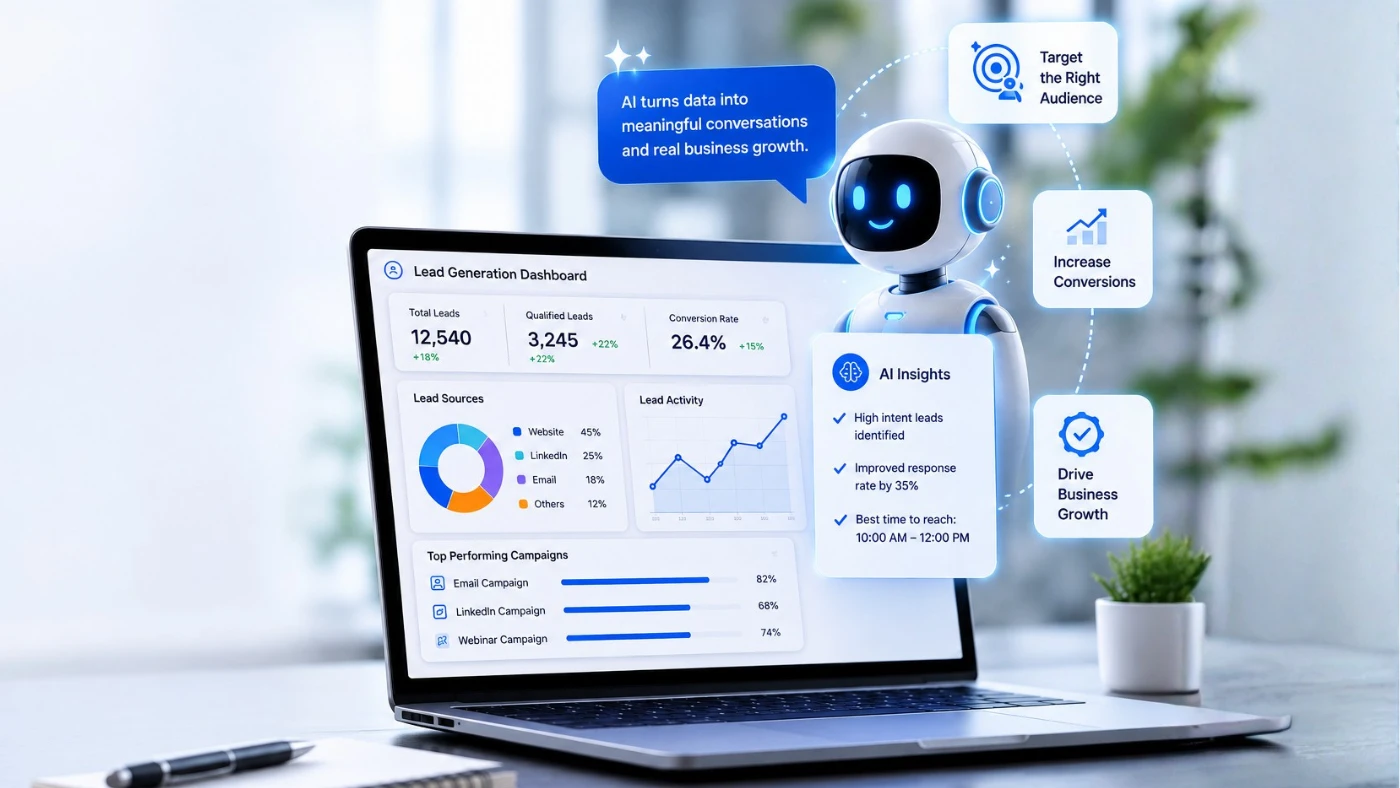
AI hasn't replaced the human side of lead generation, but it has changed how fast qualification happens. 75% of businesses now use AI in lead scoring, and 61% of B2B teams use AI for lead scoring specifically, up from just 23% in 2024. Sales teams that lean into AI-assisted workflows are reported to be up to 7x more likely to meet or exceed lead and revenue goals, and marketing automation is linked to a 451% increase in qualified leads in some analyses.
The pattern mirrors what we've seen across outsourced BPO functions generally: AI accelerates research, scoring, and first-touch personalization, while trained human SDRs still own the actual conversation - the part that determines whether a prospect trusts your brand enough to take a meeting.
How Abacus BPO Approaches Lead Generation
Our lead generation programs are built around the same principle running through the data above: speed and cost efficiency only matter if lead quality holds up. That means:
- Qualification standards defined with the client, not a generic MQL checklist
- AI-assisted prospect scoring layered under human-led outreach and follow-up
- Transparent reporting on SQL volume, conversion, and cost-per-appointment - not just activity counts
- Compliance-first outreach practices, given the regulatory scrutiny outbound programs face in 2026
The Bottom Line
The businesses winning at pipeline growth in 2026 aren't necessarily the ones with the biggest internal sales teams - they're the ones that know when to bring in outside expertise.
Choosing among lead generation companies comes down to one real test: can they show you qualification standards, industry-relevant conversion data, and a transparent path from first contact to sales-ready appointment? If they can't answer clearly, the pitch is louder than the process.