On this page
- What Is a Customer Experience Strategy?
- Why Customer Experience Strategy Is the Primary Competitive Differentiator in 2026
- The Five Components of a High-Performing Customer Experience Strategy
- Customer Experience Strategy by the Numbers: 2026 Benchmarks
- The Biggest Mistake in Customer Experience Strategy: The Perception Gap
- AI and Technology in a Modern Customer Experience Strategy
- How Abacus BPO Builds Customer Experience Strategy Into Client Programs
- The Bottom Line
Customer experience used to be a supporting function. A department that handled complaints, answered questions, and managed the interactions that happened after a sale was made. That framing is now obsolete, and the financial data behind the shift is hard to dispute.
By 2026, 89% of businesses are expected to compete primarily on customer experience, surpassing traditional factors like product and price. This shift reflects growing recognition of CX's direct impact on customer behavior: 80% of customers value their experience with a company as much as its products or services.
CX leaders generate 6 times the revenue growth of bottom-quartile peers, and the typical CX investment returns 3 times within 24 months, per Forrester CX Index 2026. 86% of buyers are willing to pay more for a better customer experience, meaning experience quality directly affects price realization, not just retention. 41% of customer-obsessed companies achieved at least 10% revenue growth in their last fiscal year, compared to just 10% of less mature companies.
At Abacus BPO, customer experience strategy is not a separate function from our contact center and outsourcing operations. It is embedded in how every program is designed, measured, and improved. This guide breaks down what a customer experience strategy actually requires in 2026, the components that drive results, the metrics that matter, and how to move from framework to execution.
What Is a Customer Experience Strategy?
A customer experience strategy is a deliberate, organization-wide plan for shaping how customers feel at every point of contact with a business. It covers every touchpoint in the customer journey, from the first awareness of a brand through purchase, onboarding, service interactions, renewals, and beyond.
The distinction between customer service and customer experience is important. Customer service is a subset of the broader experience: it is the support and resolution function that handles specific customer needs. Customer experience encompasses everything the customer feels, thinks, and concludes about a business across all interactions over the entire relationship.
The most effective customer experience strategy now combines three things: a customer-centric strategy that prioritizes personalization and trust, operational excellence that modernizes contact centers andworkforce management, and technology innovation that leverages AI agents and data platforms to deliver measurable business outcomes. The CX landscape has shifted from channel optimization to ecosystem orchestration, from reactive service to predictive engagement, and from siloed tools to unified intelligence platforms.
Why Customer Experience Strategy Is the Primary Competitive Differentiator in 2026
The competitive stakes behind CX investment have risen considerably in the past three years. The data makes the case clearly.
Gartner suggests that 89% of businesses now compete primarily on CX, making it more strategic than product and price. And while nine out of ten executives claim loyalty has grown, only four in ten consumers agree.
That perception gap is one of the most operationally important findings in recent CX research. Most businesses believe they are delivering excellent experiences. Most customers disagree. The gap is not primarily a technology gap or a service quality gap. It is a measurement and design gap: companies that do not systematically listen to customers, map their journeys, and test improvements against customer outcomes cannot close a gap they cannot see.
Organizations that have implemented AI and automation effectively are reporting measurable gains across cost, speed, and satisfaction: two-thirds of business leaders report significant performance improvements from AI investments in customer service, and mature AI-enabled environments are reporting 30% lower customer service costs according to industry benchmarks.
The Five Components of a High-Performing Customer Experience Strategy
1. Customer Journey Mapping
A customer journey map is a structured visualization of every touchpoint a customer has with a business, from first awareness through long-term relationship. It identifies where customers experience friction, where expectations are not being met, and where there are gaps between the experience that was designed and the one that is actually being delivered.
Journey mapping is a prerequisite for any serious CX improvement program because it reveals the problems that need to be solved before resources are directed at solving them. Organizations that skip journey mapping often invest in improving the touchpoints they can measure most easily, not the ones that matter most to customers.
2. Voice of the Customer Programs
Voice of the Customer (VoC) programs systematically collect, analyze, and act on customer feedback across the full journey. The three most commonly used instruments in 2026 are:
- CSAT (Customer Satisfaction Score): Measures satisfaction with a specific interaction or touchpoint. Best used for transactional moments like a support call or a purchase experience.
- NPS (Net Promoter Score): Measures overall relationship loyalty and likelihood to recommend. Best used as a relationship-level measure tracked over time.
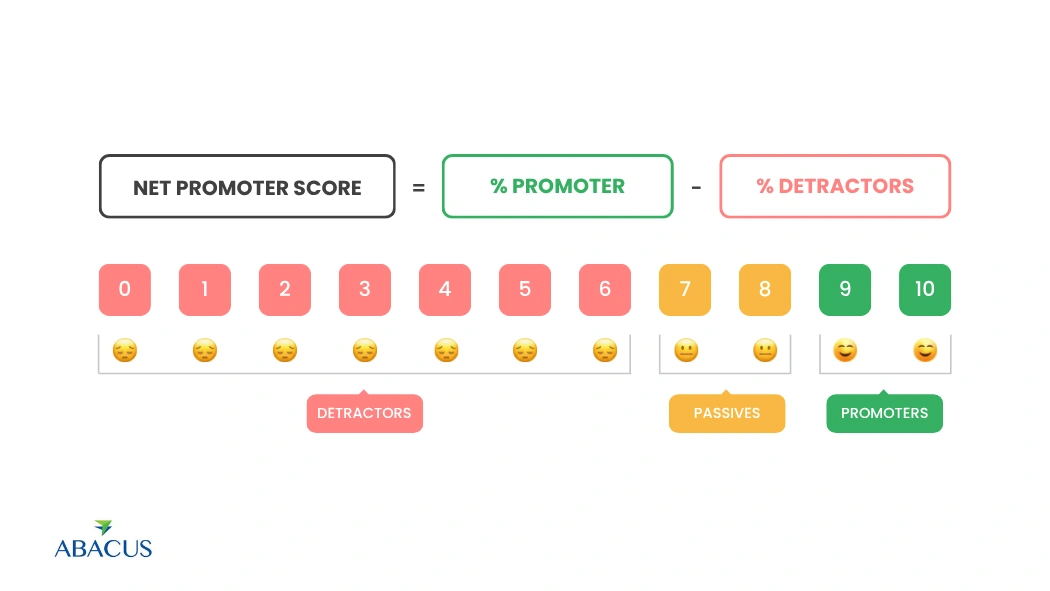
- CES (Customer Effort Score): Measures how easy it was for a customer to accomplish what they were trying to do. The Customer Effort Score measures how easy it was to get help. In a fast-paced world, ease of use is the number one predictor of customer loyalty; the less effort a customer expends, the more likely they are to stay.
A complete VoC program uses all three, at different points in the customer journey, and routes insights directly into the operational teams who can act on them.
3. Proactive Engagement Design
By 2026, 40% of customer service organizations will adopt proactive strategies, enabling them to anticipate needs, resolve issues before they escalate, and contribute directly to revenue growth. The organizations capturing the most CX value are not those with the best reactive service. They are those that design experiences to prevent problems from occurring and intervene proactively at the moments of highest risk before customers need to reach out.
Proactive CX means building systems that surface problems early: using behavioral data to identify at-risk customers before they contact support, notifying customers about delivery delays before they discover them, and scheduling proactive outreach when usage data signals that a customer may not be getting value from a product or service.
4. Omnichannel Consistency
Customers in 2026 do not experience a brand through a single channel. They use phone, email, live chat, social media, and self-service portals, and they expect their history and context to follow them across all of those channels without requiring repetition.
Exceptional service requires that support be as seamless as switching between apps. Whether on WhatsApp, email, or live chat, customers expect smooth omnichannel experiences that do not require repeating themselves.
Omnichannel consistency is an operational challenge as much as a technology one. It requires unified customer data, integrated systems, consistent agent training across channels, and clear protocols for cross-channel handoffs.
5. Closed-Loop Feedback and Continuous Improvement
A VoC program that collects feedback without acting on it is worse than no program at all: it creates the expectation of listening without the reality of change. Closed-loop feedback means that every significant piece of customer feedback, positive or negative, is routed to the team responsible for that touchpoint, and that team is accountable for acting on it.
The service recovery paradox remains one of the most underutilized findings in CX: customers who experience a well-handled issue become more loyal than customers who never had an issue. Leaders systematically identify service failures and invest in structured recovery, turning defection risk into loyalty lift.
Customer Experience Strategy by the Numbers: 2026 Benchmarks
| CX Metric or Finding | Statistic | Source |
|---|---|---|
| Businesses competing primarily on CX in 2026 | 89% | Gartner, 2026 |
| Customers valuing experience as much as product | 80% | Salesforce State of the Connected Customer |
| Buyers willing to pay more for better experience | 86% | Forrester CX Index 2026 |
| Revenue growth advantage of CX leaders vs. laggards | 6x | Forrester CX Index 2026 |
| Typical CX investment ROI within 24 months | 3x | Forrester CX Index 2026 |
| Revenue growth among customer-obsessed companies | 41% achieved 10%+ growth | Forrester 2026 |
| Customer service organizations adopting proactive CX by 2026 | 40% | Gartner |
| Business leaders reporting significant AI-driven improvements | 66% (two-thirds) | Zendesk CX Trends 2026 |
| Lower customer service costs in mature AI environments | 30% | CGS Nexus, citing industry benchmarks |
| Customers more likely to repurchase after exceptional service | 93% | Help Scout, cited via Salesmate 2026 |
| Customers who value personalized service based on their history | 87% | Five9, cited via Salesmate 2026 |
| Customers satisfied after issue well-handled vs. never having one | Higher loyalty | Service Recovery Paradox, multiple sources |
The Biggest Mistake in Customer Experience Strategy: The Perception Gap
A massive perception gap persists between what companies think they deliver and what customers actually experience. Firms invest millions in product improvements while ignoring the very thing clients judge first: how they feel at every touchpoint.
The organizations that close this gap do three things differently from the ones that do not:
They measure the customer's experience, not their own internal performance metrics. Internal SLA compliance and handle time targets tell you how efficiently a process runs. CSAT, CES, and NPS tell you whether customers actually experienced what was intended. Both sets of metrics are needed, but the customer-facing ones are the ones that drive retention.
They act on feedback systematically, not selectively. Positive NPS results are easy to share internally. Critical feedback from customers who scored low and then churned is harder but more useful. The organizations with the strongest CX outcomes build systematic processes for reviewing and acting on negative feedback at the same speed they celebrate positive results.
They connect CX data to business outcomes. AI, real-time dashboards, and structured CX programs tie experience data to business outcomes, giving firms the insights they need to benchmark, act, and stay ahead in 2026. When customer satisfaction scores are connected to retention data, revenue data, and lifetime value data in the same reporting system, the business case for CX investment becomes self-evident and the teams responsible for delivery have clear accountability for outcomes, not just activities.
AI and Technology in a Modern Customer Experience Strategy
Technology has become inseparable from CX strategy in 2026, but the organizations getting the most from it are using AI to augment human service rather than replace it.
AI-powered predictive analytics enables businesses to anticipate customer needs and optimize their strategies. For companies investing in hyper-personalized CX strategies, the ROI has been shown by McKinsey to be up to 25% revenue growth and 50% lower customer acquisition costs.
CX trendsetters, which are organizations with high AI maturity, adopt key AI tools nearly four times more than their peers and track automation success rates at 66% versus 21% for lower-maturity organizations.
The most effective technology integration in CX follows a consistent pattern: AI handles volume (routing, triage, simple query resolution, and first-touch personalization) while human agents handle complexity, emotion, and relationship-dependent interactions. The handoff between the two is where most organizations lose the most value, and it is where the best CX strategies invest the most design attention.
How Abacus BPO Builds Customer Experience Strategy Into Client Programs
AtAbacus BPO, customer experience strategy is not a pitch-deck concept. It is built into the operational design of every contact center and outsourcing program from the start:
- Journey mapping with each client identifies the touchpoints that matter most before any agent or technology is configured
- CSAT, NPS, and CES measurement frameworks are embedded in program design, not added as reporting afterthoughts
- Proactive outreach cadences are built into program design for clients running retention-sensitive accounts
- Omnichannel consistency standards are enforced across all channels operated on a client's behalf
- Client reporting connects CX metrics to retention and revenue outcomes, not just activity volumes, so the business impact of service quality is visible and attributable.
The Bottom Line
A customer experience strategy in 2026 is not a customer service improvement program. It is a revenue strategy, a retention strategy, and a competitive positioning strategy rolled into one. The businesses generating the most value from CX investment are the ones that measure rigorously, act systematically, design proactively, and connect every service interaction to a clear business outcome.
The gap between average and excellent CX is not primarily a technology gap. It is a design and accountability gap. Organizations that close it will outperform their markets. Those that do not will spend more acquiring customers they cannot keep.