On this page
- How Automated Phone Calling Shifts First-Contact Resolution Upstream
- Three Failure Modes That Flatten Deflection Velocity in Shared Infrastructure
- Architecting Callback Sequencing to Compress Mean Resolution Time
- Vendor Selection Criteria That Matter When Deflection Is Your Core Metric
- Frequently Asked Questions
Most operations leaders first measure automated phone calling success by pick-up rates. That instinct is understandable but incomplete. A call that is answered and immediately escalated to an agent has not deflected anything; it has simply rerouted the queue. The metric that actually matters is deflection velocity: how fast an outbound attempt closes a case without consuming agent time. Building a programme around that metric requires rethinking the entire call architecture, from the initial dial logic through IVR branching to the conditions that trigger a human handoff.
How Automated Phone Calling Shifts First-Contact Resolution Upstream
Traditional inbound queuing is reactive: a customer experiences a problem, dials in, and waits. Automated phone calling inverts that sequence by initiating contact at a point in the customer journey when a resolution is still simple. According to NICE's overview of automated calling systems, these platforms can be configured to trigger outbound calls based on workflow events, not just static lists, which means the dial can fire the moment a system flags an anomaly rather than waiting for a complaint.
Mechanics of upstream deflection
The deflection happens at the dial itself when the message delivered is specific enough to resolve the trigger event. A generic reminder call adds contact volume. A call that names the account, states the specific action required, and offers a keypress confirmation closes the loop without an agent ever seeing the case. That distinction, specificity of content versus broadcast volume, is what separates programmes with strong first-contact resolution from ones that inflate handle time.
Automated outbound calling software that supports dynamic message assembly, pulling live account data into a pre-recorded script at dial time, is the operational requirement for this. Static recordings can still deflect, but their resolution ceiling is lower because they cannot respond to account-specific variables.

Three Failure Modes That Flatten Deflection Velocity in Shared Infrastructure
Deflection velocity collapses in predictable ways when dialing systems, IVR logic, and agent handoff routing all compete for the same infrastructure layer. Understanding these failure modes before they appear in a weekly dashboard is the difference between corrective action and emergency triage.
1. Port contention during peak dial windows
When outbound dialing campaigns run concurrently with high inbound volume, shared SIP trunks throttle. The dialer queues attempts, latency between dial and answer increases, and the customer who does pick up hears a delayed greeting or a silent two-second gap. That gap alone can drop to a hang-up before the message starts. The fix is infrastructure isolation: dedicated outbound trunks that do not share capacity with the inbound ACD, even at the cost of idle capacity during off-peak hours.
2. IVR logic that escalates before confirming deflection
Many IVR trees are built to route callers to agents as a default on any keypress outside the expected flow. That design made sense for inbound complaint handling but actively undermines outbound deflection. A customer who presses an unexpected key mid-notification should be offered a confirmation retry or a callback slot, not immediately transferred. Reviewing IVR exit paths specifically for outbound call flows is a separate exercise from inbound design and is frequently skipped.
3. Handoff triggers that fire on sentiment rather than resolution state
Speech analytics integrations sometimes escalate a call to a live agent the moment negative sentiment is detected, regardless of whether the case is actually unresolved. A customer who says "finally" in a relieved tone can register as frustrated. Calibrating sentiment thresholds to resolution state, confirmed by a keypress or a data-write, prevents false escalations that consume agent time on already-closed cases.
Common automated calling failure modes and their operational impact on deflection velocity
| Failure Mode | Root Cause | Deflection Impact | Mitigation Approach | Source |
|---|---|---|---|---|
| Port contention | Shared SIP trunks | Increased abandon before message delivery | Dedicated outbound trunk allocation | VoiceSpin |
| IVR default escalation | Inbound-designed logic applied to outbound | Agent handle time rises on resolved cases | Separate outbound IVR exit paths | CallHub |
| False sentiment escalation | Uncalibrated speech analytics thresholds | Live agents absorb closed-case contacts | Resolution-state gating before transfer | NICE |
| Static message content | No dynamic data assembly at dial time | Low specificity reduces keypress confirmation rate | Live data pull into message template | Nextiva |
| Concurrent campaign overlap | No campaign priority queue | Lower-priority dials crowd out time-sensitive triggers | Event-based campaign sequencing | Bland AI |
Sources: VoiceSpin, CallHub, NICE, Nextiva, Bland AI.
Architecting Callback Sequencing to Compress Mean Resolution Time
Callback sequencing is where deflection velocity is won or lost in practice. The question is not how many attempts a campaign makes but in what order and at what interval those attempts fire relative to the triggering event.
A weekly review in a fintech programme
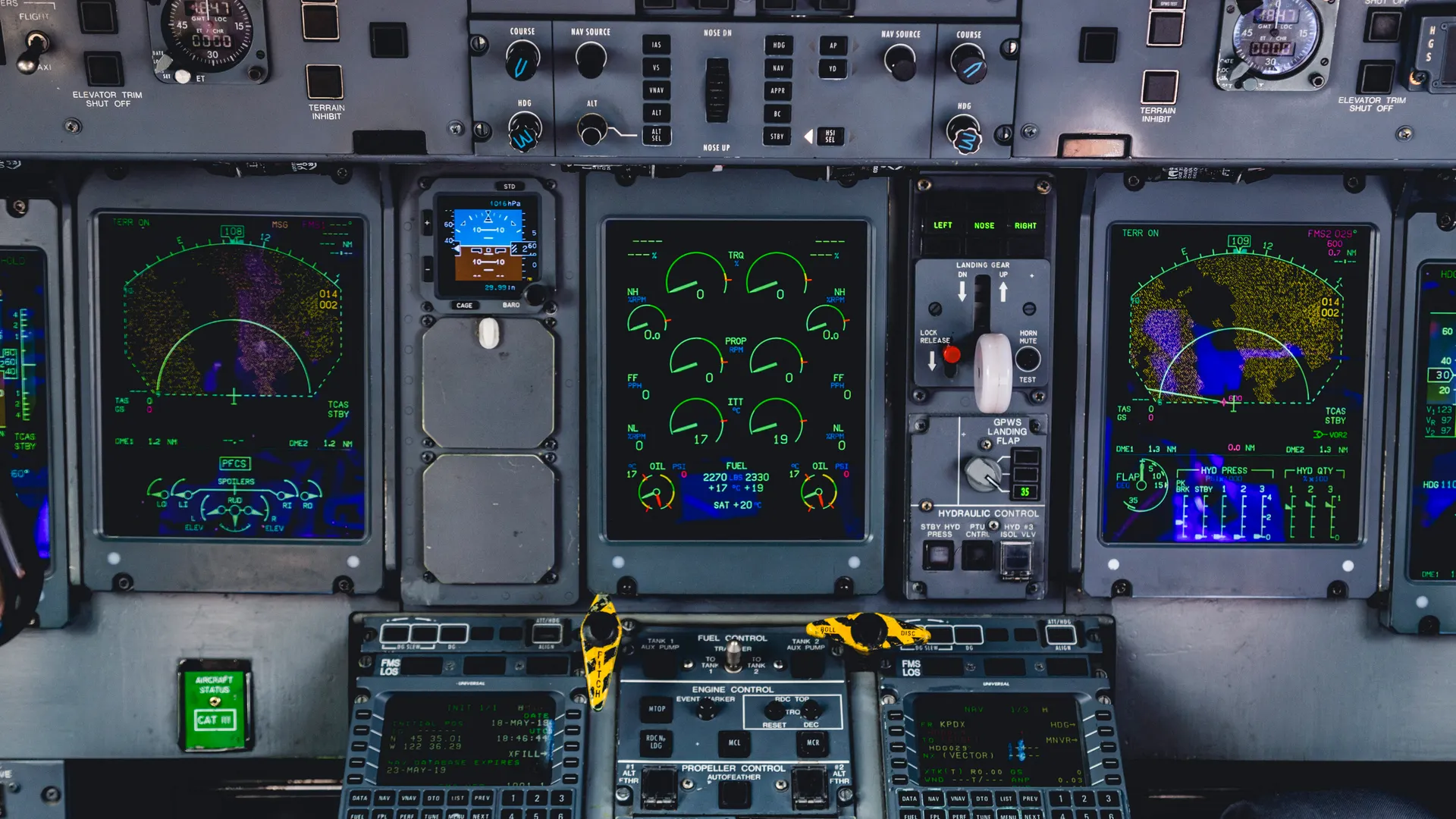
At a 110-agent programme serving a fintech app's chat and email queue, the operations manager pulled the prior week's campaign data onto the main screen during the Monday morning review. The team could see three metrics side by side: time-to-first-dial after event trigger, time-to-confirmed-resolution, and the share of cases that reached a live agent despite a completed outbound attempt. That third number, cases that still reached agents after the automated call had been answered, was 22 percent. The team traced it to a single sequencing gap: the second-attempt window was set to 24 hours, long enough for customers to contact inbound chat first. Compressing the retry window to 90 minutes for high-priority event types dropped that figure within two weeks. The fix cost no additional dials; it was purely a scheduling decision.
Retry interval design is a resolution architecture decision, not a campaign settings afterthought. The gap between attempts determines whether the customer resolves through the automated channel or routes around it to inbound.
Priority tiers and event classification
Not all trigger events carry the same urgency. Structuring campaigns into priority tiers, each with its own retry interval and escalation threshold, prevents low-urgency notification dials from occupying the same first-attempt window as time-sensitive alerts. Automated phone call systems for businesses that support event-based campaign prioritisation make this tiering operationally straightforward; those that treat all campaigns as equal-priority queues force manual workarounds that are rarely maintained consistently.
Vendor Selection Criteria That Matter When Deflection Is Your Core Metric
Feature lists for automated phone calling platforms look similar across vendors. The differentiating criteria only appear when deflection velocity is the frame of evaluation rather than dial volume or uptime.
Historical deflection rate transparency
Ask any vendor to show anonymised deflection rates, not pick-up rates or delivery rates, from programmes at comparable scale and event-trigger complexity. Vendors who cannot produce that data either do not instrument it or have not had clients who demanded it. Both are disqualifying signals for a programme where deflection is the primary operational target.
Infrastructure isolation options
Shared multi-tenant infrastructure is acceptable for low-volume or low-priority campaigns. For high-volume operations with seasonal peaks, the absence of a dedicated infrastructure tier is a structural risk. Nextiva's documentation on automated phone calling notes that IP telephony architecture decisions directly affect how call volume scales without degrading quality, which makes infrastructure topology a first-order evaluation criterion rather than a procurement detail.
IVR customisation depth for outbound flows
Vendors optimised forinbound IVR design often bolt outbound logic onto an existing inbound tree. The result is the escalation failure mode described in section two. Evaluate whether the platform offers a fully separate outbound IVR design environment or whether outbound exit paths are constrained by inbound routing rules. That distinction is not visible in a demo but surfaces immediately in a technical architecture review.
Abacus BPO, which has operated contact centre and back-office programmes since 2008 and holds ISO 27001, ISO 27701 and ISO 18295-1 certifications, evaluates these same infrastructure criteria when designing deflection-first programme architectures for clients with complex seasonal volume profiles.
Frequently Asked Questions
What is automated phone calling and how does it differ from a standard outbound dialer?
Automated phone calling is a software-driven process that initiates or manages outbound calls based on a list, a schedule or a live event trigger, delivering pre-recorded or dynamically assembled messages without requiring an agent to dial. A standard outbound dialer typically connects a call to a live agent once the line is answered, whereas an automated calling system can resolve the interaction entirely through recorded content or IVR keypress responses. The operational distinction matters most when deflection, not conversation, is the programme objective.
How is deflection velocity measured in an automated phone calling programme?
Deflection velocity measures how quickly an outbound call attempt closes a case without consuming live agent time, expressed as the gap between the trigger event and confirmed case closure through the automated channel. It is distinct from pick-up rate or delivery rate, which count contact without counting resolution. Programmes that instrument deflection velocity separately from campaign delivery metrics consistently identify sequencing and IVR design improvements that volume metrics alone would not surface.
What causes automated phone calling deflection rates to drop during seasonal peaks?
The most common cause is port contention on shared infrastructure, where outbound dialing and inbound ACD traffic compete for the same SIP trunk capacity, increasing latency and silent-gap abandon rates before the message plays. A secondary cause is campaign priority queuing failures that allow low-urgency notification dials to crowd the first-attempt window for time-sensitive trigger events. Dedicated outbound trunk allocation and event-based campaign prioritisation are the standard architectural responses.
How should callback sequencing be structured to minimise inbound fallback contacts?
The retry interval between outbound attempts should be calibrated to the typical time a customer would wait before contacting an inbound channel, and the first-attempt window should fire as close to the trigger event as regulations permit. When retry windows are set to 24-hour intervals, customers frequently resolve through inbound chat or email before the second automated attempt, negating the deflection benefit. Compressing high-priority retry windows to 90 minutes or less, with resolution-state confirmation before closing the case, is the most reliably effective adjustment.
What vendor criteria matter most when automated phone calling deflection is the primary programme metric?
The three criteria that differentiate vendors for deflection-first programmes are historical deflection rate transparency at comparable scale, the availability of a dedicated infrastructure tier for high-volume seasonal operations, and a fully separate outbound IVR design environment not constrained by inbound routing logic. Vendors who cannot supply anonymised deflection rate data from existing clients have not instrumented the metric their prospective client needs most. Infrastructure topology and IVR customisation depth are technical architecture questions that require a formal review session rather than a product demo.