On this page
- How AI-generated call summaries and after-call work automation reduce handle time per agent
- What contact centers lose when after-call work remains manual
- Integration requirements for deploying summaries across legacy phone systems
- Measuring after-call work automation impact on first-contact resolution and customer satisfaction
- Frequently Asked Questions
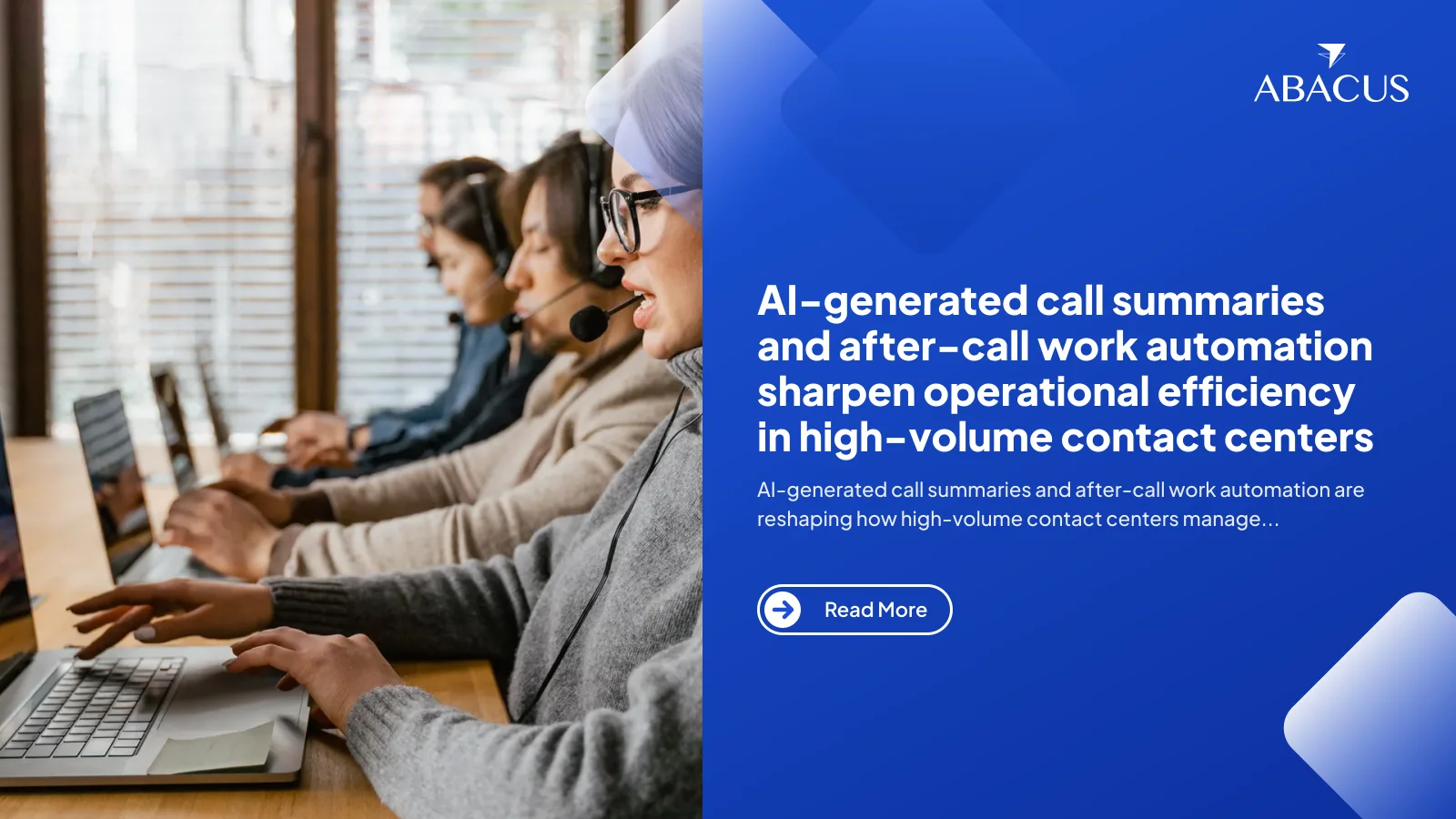
After-call work is one of the most consistently underestimated drains in contact center operations. Agents wrap up, the customer hangs up, and then the clock keeps running while notes get typed, dispositions get coded, and CRM fields get filled in from memory. In a 200-seat center running twelve hours a day, those minutes compound into something that deserves serious operational attention. The growing adoption of AI-generated call summaries and after-call work automation is forcing a rethink of how post-interaction time is structured, and the results are changing baseline assumptions about agent capacity.
How AI-generated call summaries and after-call work automation reduce handle time per agent
Average handle time (AHT) is the metric most operations leaders watch, but after-call work (ACW) is the component they control least. When a summary generates automatically at call end, the agent's task shifts from composition to confirmation: read, adjust if needed, approve. That distinction matters at scale.
Minutes recovered per shift add up fast
According to Metrigy research cited by Computer-Talk, agents using AI-generated summaries recover meaningful wrap-up time per interaction, which compounds across a full shift into a measurable block of reclaimed capacity. For a blended agent handling sixty calls a day, even ninety seconds saved per call returns close to two hours of availability, time that can absorb additional volume or reduce occupancy pressure without adding headcount.
The mechanism is speech-to-text transcription combined with natural language processing. The system listens to the entire conversation in real time, identifies key topics, actions agreed, and resolution status, then formats a structured note the moment the call ends. Agents never reconstruct from memory. Supervisors reviewing interactions at scale get consistent record formats rather than a mix of shorthand and omissions.

Capacity gains without headcount changes
The downstream effect on scheduling is real. When ACW shrinks, shrinkage calculations change, and planners can model tighter occupancy targets without pushing agents into burnout territory.Contact center workflow automation frameworks treat ACW reduction as a first-order lever precisely because it affects every agent on every shift, not just a subset of interactions.
What contact centers lose when after-call work remains manual
Manual wrap-up is not merely slow. It introduces a specific class of errors that automated processes eliminate structurally, and those errors carry compliance and quality assurance consequences that aggregate over time.
Data entry errors and their downstream effects
When agents type notes from memory under queue pressure, three failure modes appear consistently: omitted detail, incorrect disposition coding, and inconsistent terminology across agents. A quality assurance team reviewing interactions weeks later cannot reconstruct what actually happened from a three-word note. As SQM Group observes, AI-supported after-call work produces cleaner, more consistent interaction data across the organization, reducing variation caused by individual note-taking styles and giving leaders higher-confidence insights for QA and coaching decisions.
Compliance gaps unique to manual processes
In regulated industries, call documentation is not optional. Healthcare, financial services, and utilities face audit requirements where incomplete records create liability exposure. Manual ACW processes depend on agent attention at the end of the highest-fatigue moment in an interaction. AI summaries capture the full transcript context, including disclosures made and commitments given, fields that an exhausted agent is most likely to underrecord.
The quality assurance gap in manual wrap-up is not random. Errors cluster at peak occupancy periods, precisely when accurate documentation matters most for risk management.
Operational comparison: manual after-call work versus AI-automated summaries across key contact center dimensions
| Dimension | Manual ACW | AI-automated ACW | Source |
|---|---|---|---|
| Summary consistency | Varies by agent and fatigue level | Standardized format every interaction | SQM Group |
| Wrap-up time | 2 to 5 minutes typical | Agent confirms in under 30 seconds | Aircall / Computer-Talk |
| CRM data quality | Prone to omission under queue pressure | Structured fields populated automatically | NICE / Dialpad |
| Compliance record completeness | Dependent on agent recall | Full transcript context captured | Observe.AI |
| QA reviewability at scale | Limited by note quality | Supervisors can review interactions at scale | Dialpad |
| Agent cognitive load post-call | High: composition from memory | Low: confirmation and correction only | Vida AI / Wizr.ai |
Sources: SQM Group; Aircall; Computer-Talk; NICE; Dialpad; Observe.AI; Vida AI; Wizr.ai.
Integration requirements for deploying summaries across legacy phone systems
Deploying AI summary tools is straightforward in greenfield environments. In the reality most US contact centers face, it means connecting new AI layers to telephony infrastructure that was not designed with API-first architecture in mind.
The core architecture stack
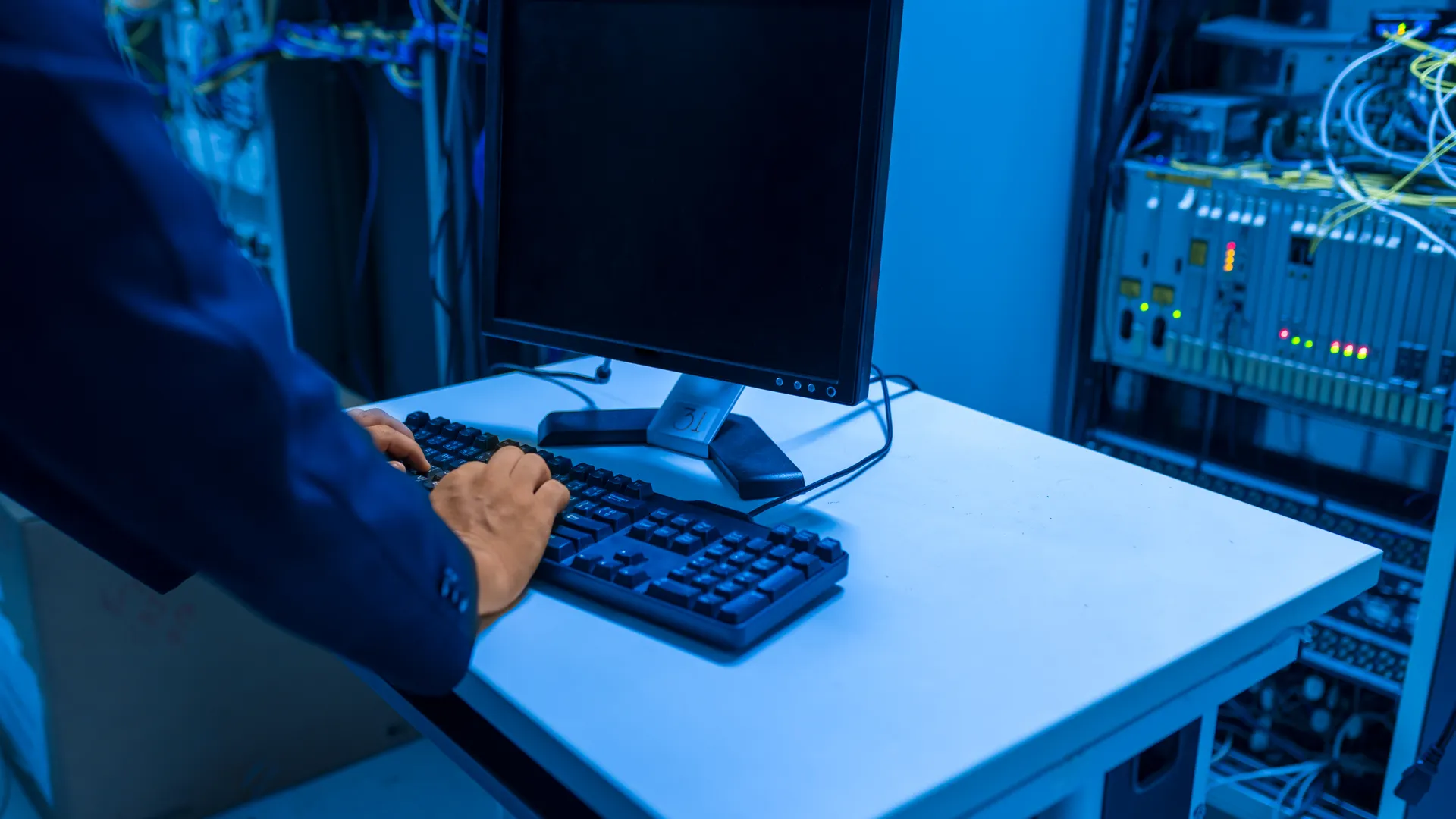
Three integration points determine whether deployment succeeds: the telephony layer (ACD or dialer), the transcription engine, and the CRM. The telephony layer must expose a post-call audio stream or real-time media stream that the transcription engine can consume. Older on-premise ACDs often require a session border controller or a middleware recording adapter to make that stream available. Without it, the AI has nothing to process.
Once transcription is in place, the NLP summarization layer needs a defined schema that matches CRM field structure. A summary that generates in plain text but cannot write structured data back to Salesforce or ServiceNow requires a separate mapping layer. Teams that skip this step end up with summaries in a silo, readable but not actionable. Understanding how speech analytics works in contact centersclarifies why the transcription and NLP layers are separable components, each with its own latency and accuracy considerations.
Dialer and blended-agent considerations
Outbound dialers introduce additional complexity. Predictive dialers that drop calls before a live agent connects create partial audio segments that can confuse summarization models trained on complete conversations. Blended agents handling both inbound and outbound require summary schemas that capture different disposition fields depending on call direction. These are solvable engineering problems, but they require scoping before vendor selection, not after.
Measuring after-call work automation impact on first-contact resolution and customer satisfaction
First-contact resolution (FCR) is where the operational value of accurate, complete call records becomes most visible. FCR fails for one of a small number of reasons: the customer calls back because the issue was not resolved, or the issue was resolved but the record does not reflect it, causing unnecessary follow-up.
How summaries improve handoffs and callbacks
When a customer transfers between agents or calls back the following day, the receiving agent's first thirty seconds determine whether the interaction rebuilds trust or erodes it. An AI-generated summary gives that agent accurate context: what was discussed, what was promised, what remains open. Manual notes from the prior interaction may be incomplete, in shorthand, or simply missing. The difference in customer effort is immediate and measurable in CSAT scores.
According to Vida AI's analysis of contact center ACW workflows, generative AI now produces human-quality call summaries in seconds, and contact centers implementing these tools report improvements in interaction data completeness that directly support faster callback resolution. Complete context on re-contact means agents spend less time reconstructing history and more time solving the residual issue.
Connecting summary quality to FCR measurement
FCR measurement itself becomes more reliable when summary data is consistent. Manual ACW produces heterogeneous records that make it difficult to distinguish a genuine repeat contact from a related but distinct inquiry. Standardized AI summaries with structured disposition codes allow analytics teams to apply consistent FCR logic across the dataset. The result is an FCR metric that reflects actual performance rather than recording variation. For operations leaders benchmarking against industry targets, that distinction is not trivial. Abacus BPO, which has run contact centre and back-office programmes since 2008 under ISO 27001, ISO 27701, and ISO 18295-1 certifications, treats summary standardization as a prerequisite for meaningful FCR reporting across client programmes. ConnectingAI call center solutions to existing quality frameworks is where the measurement discipline actually gets built.
Frequently Asked Questions
What are AI-generated call summaries and after-call work automation?
AI-generated call summaries use speech-to-text transcription and natural language processing to automatically create structured records of customer interactions the moment a call ends. After-call work automation extends this by writing those summaries back to CRM fields, coding dispositions, and triggering follow-up tasks without agent input. Together they replace the manual wrap-up period that traditionally adds two to five minutes of non-talk time after every interaction.
How much handle time can AI-generated call summaries and after-call work automation realistically save?
The time recovered depends on current ACW benchmarks, but research cited by Computer-Talk using Metrigy data indicates agents using AI summaries recover significant wrap-up time per call. Across a full shift of sixty or more interactions, that compounds into close to two hours of additional availability per agent per day. The actual gain depends on call complexity, current ACW discipline, and how completely the tool integrates with the CRM.
Do AI summary tools work with older on-premise phone systems?
Yes, but integration requires additional architecture. Older ACDs and dialers often need a session border controller or recording adapter to expose the audio stream the AI transcription engine consumes. Without a clean audio feed and a CRM field mapping layer, summaries generate in isolation and cannot write structured data back to existing systems. Scoping these requirements before vendor selection avoids the most common deployment failures.
How does after-call work automation affect compliance in regulated industries?
Manual ACW processes rely on agent recall at the highest-fatigue moment of an interaction, which is when omissions and errors cluster most densely. AI summaries capture the full transcript context, including disclosures made and commitments given, producing audit-ready records for every interaction. For healthcare, financial services, and utilities contact centers, that structural completeness reduces liability exposure compared to notes written from memory under queue pressure.
Can AI-generated call summaries improve first-contact resolution rates?
Accurate, complete summaries improve FCR in two ways: they give agents handling callbacks or transfers full context on prior interactions, reducing re-explanation time and resolution errors, and they standardize disposition coding so FCR measurement reflects actual repeat contacts rather than recording variation. Both effects are most pronounced in high-volume environments where agent turnover and shift handoffs make consistent note quality difficult to sustain manually.